


WASHINGTON — American homebuyers comparing FHA vs VA Loans against a 5/6 adjustable-rate mortgage right now can cut their monthly housing payment by $164 to $434 before the Federal Reserve meets on December 8–9, 2026. While the average 30-year conventional fixed mortgage sits at 7.10%, government-backed 30-year FHA loans have dropped to 6.57%, 30-year VA loans average 6.64%, and 5/6 SOFR ARMs price at 6.65%.
That 45-to-53-basis-point discount represents thousands of dollars in annual household cash flow during a high-rate housing market. With the Federal Open Market Committee entering its pre-meeting blackout window on November 28, 2026, locking the right loan structure before the December 9, 2026 policy announcement at 2:00 PM EST could shield your budget from fresh bond-market volatility.
Key Financial Takeaways (At a Glance):
- Who Qualifies: Low-down-payment civilians (FHA), eligible military/veterans (VA), and shorter-horizon high-credit buyers (5/6 ARM).
- Official Rate Benchmark: FHA 6.57% (7.77% APR), VA 6.64% (6.81% APR), 5/6 ARM 6.65% (6.72% APR) vs. Conventional 7.10% as of late November 2026. Forbes
- Effective Deadlines: December 9, 2026 FOMC decision (2:00 PM EST) and January 1, 2027 loan limit increases. Fed Interest Rate 2026
- Governing Agencies: HUD/FHA, Department of Veterans Affairs, FHFA, CFPB, and Federal Reserve.
- Average Dollar Impact: Saves $164 to $434 per month ($1,968 to $5,208 yearly) on a $450,000 US home purchase.
- Smart First Move: Pull official credit reports and request side-by-side Loan Estimates inside a single 14-day rate-shopping window.
FHA vs VA Loans: Official Rules, Federal Policies, and What Just Changed
Two major Washington policy shifts in late November 2026 just rewrote the mortgage math for 2027 buyers. First, on November 24, 2026, the Federal Housing Finance Agency raised the 2027 baseline conforming loan limit by 2.72% to $855,400, up $22,650 from 2026’s $832,750 cap. High-cost counties now reach a $1,283,100 ceiling.
Second, on the same day, the FHFA officially approved FICO Score 10T and aligned its rollout timeline with VantageScore 4.0 for Fannie Mae and Freddie Mac loans. Unlike Classic FICO, these modernized models weigh 24 months of trended credit balances, rent payments, and utility records. Borrowers who pay down revolving debt steadily will earn stronger pricing on conventional 5/6 ARMs in 2027.
Meanwhile, Federal Reserve policymakers are holding the federal funds target range at 3.75% to 4.00% heading into their December 8–9, 2026 FOMC meeting. Even if the Fed holds steady, hawkish shifts in the December 9 Summary of Economic Projections—known on Wall Street as the dot plot—can push 10-year Treasury yields and fixed mortgage rates higher within minutes.
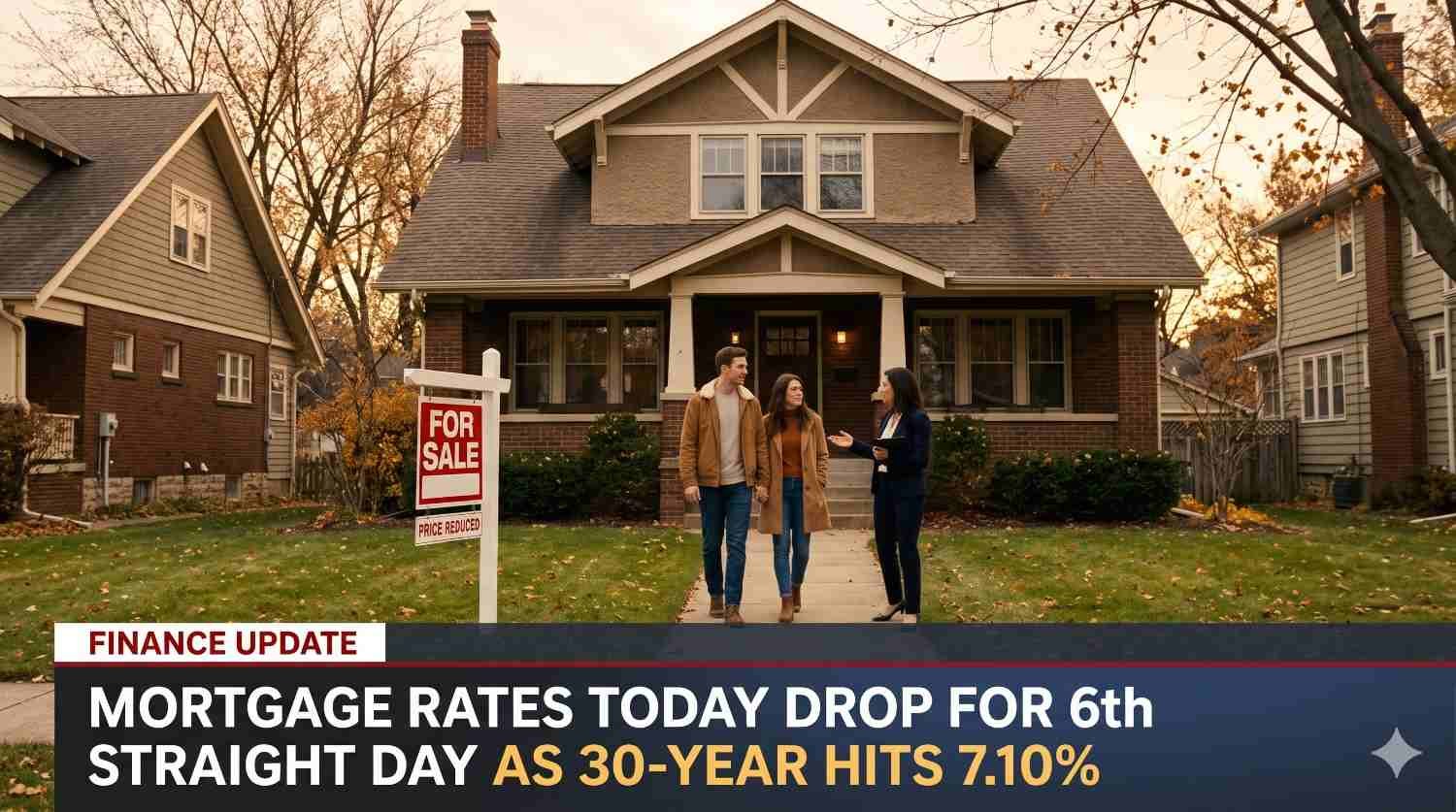
Caption: Federal Reserve benchmark rates and November 2026 FHFA loan limit expansions directly shape mortgage pricing across government-backed and adjustable home loans.
Federal Protections, Government Programs, and FHA vs VA Loans Requirements
Behind the headline interest rates, federal underwriting rules dictate who actually clears the bank’s credit committee. When evaluating FHA vs VA Loans alongside a conventional 5/6 ARM, lenders enforce strict statutory thresholds governed by the Truth in Lending Act (Regulation Z), RESPA, and the Equal Credit Opportunity Act.
- HUD/FHA Underwriting Rules: Governed by the U.S. Department of Housing and Urban Development, FHA mortgages allow a 3.5% down payment with a 580 FICO score, or 10% down between 500 and 579. Automated underwriting frequently approves back-end Debt-to-Income (DTI) ratios up to 50%, stretching to 56.9% with compensating cash reserves. Quicken Loans
- FHA Statutory Loan Caps & MIP: The 2026 FHA floor sits at $541,287 and the high-cost ceiling at $1,249,125. Under the Housing and Economic Recovery Act formula tied to FHFA’s new $855,400 baseline, HUD’s 2027 limits track to a $556,010 floor and a $1,283,100 ceiling. Every FHA borrower pays a 1.75% Upfront Mortgage Insurance Premium (UFMIP) plus 0.55% annual MIP for standard 30-year loans under 5% down. Federal Housing Finance Agency (FHFA)+ 1
- VA Loan Protections & Residual Income: Backed by the U.S. Department of Veterans Affairs, VA mortgages require 0% down payment and zero monthly private mortgage insurance. The VA sets no statutory minimum credit score—though most lenders apply an internal overlay of 620—and caps lender origination fees at 1% of the loan amount. Veterans with full entitlement face no federal loan cap, provided they meet regional residual-income minimums after taxes and utilities. Veterans United Home Loans
- 5/6 SOFR ARM Mechanics: Conventional 5/6 ARMs fix your interest rate for the first 60 months, then reset every six months based on the 30-day average Secured Overnight Financing Rate (SOFR)—standing at 3.93% as of November 27, 2026—plus a fixed lender margin of 2.75% to 3.00%. Federal Regulation Z mandates clear rate caps, typically structured as 2/1/5 (2% max jump at Year 6, 1% per six-month reset, and 5% lifetime ceiling). FRED – Federal Reserve Bank of St. Louis
Former Underwriter Reality Check: Banks qualify 5/6 ARM applicants at the greater of the note rate plus 2% (8.65% today) or the fully indexed rate—not the 6.65% teaser rate. That stress test quietly disqualifies higher-DTI buyers who easily pass FHA or VA underwriting.
Knowing the federal rules is only half the equation; seeing how lender fees and APR spreads separate these three loans side-by-side exposes where most borrowers accidentally overpay.
2025 vs. 2026–2027 Rate, Fee & Eligibility Matrix (Side-by-Side Breakdown)
Mortgage ads spotlight the base interest rate while burying upfront fees and ongoing insurance inside the Annual Percentage Rate (APR). Compare the live late-November 2026 pricing, 2026–2027 federal limits, and bank underwriting cutoffs across all four major US mortgage paths below.
Forbes
| Loan Feature / Underwriting Metric | 30-Year FHA Fixed | 30-Year VA Fixed | 5/6 SOFR ARM (Conforming) | 30-Year Conventional Fixed |
|---|---|---|---|---|
| Late-Nov 2026 Avg. Interest Rate | 6.57% | 6.64% | 6.65% (5-Yr Fixed) | 7.10% |
| Late-Nov 2026 Avg. APR | 7.77% | 6.81% | 6.72% (Initial Est.) | 7.14% |
| Minimum Down Payment | 3.5% (580+ FICO) | 0% (Full Entitlement) | 5% (95% Max LTV) | 3%–5% (First-Time / Std.) |
| Typical Lender Min. FICO | 580 (500 w/ 10% down) | 620 (Lender Overlay) | 660–700+ (Best at 740+) | 620 (Best Pricing 740+) |
| Max Back-End DTI Ratio | Up to 50%–56.9% | 41%+ (Residual Income) | 43%–45% (Stress-Tested) | 45%–50% |
| Upfront Govt. / Guarantee Fee | 1.75% UFMIP | 2.15% (1st Use, 0% Down)* | None ($0) | None ($0) |
| Monthly Mortgage Insurance | 0.55% Annual MIP | $0 (Never Required) | PMI if under 20% down | PMI if under 20% down |
| 2026 vs. 2027 Loan Limit (1-Unit) | $541,287 → ~$556,010 Floor | No Cap (Full Entitlement) | $832,750 → $855,400 | $832,750 → $855,400 |
| Refinance / Rate-Drop Exit Path | FHA Streamline (No Appraisal) | VA IRRRL (0.50% Fee) | Standard Refinance | Standard Refinance |
*VA Funding Fee drops to 1.50% with 5% down, 1.25% with 10% down, rises to 3.30% on subsequent 0%-down use, and is 0% (waived) for veterans receiving service-connected disability compensation.
Look closely at the APR row in the table above. Although FHA boasts the lowest headline interest rate at 6.57%, its 7.77% APR is the highest on the board—a staggering 120-basis-point gap driven by the 1.75% upfront MIP and lifetime 0.55% annual MIP.
When you examine FHA vs VA Loans purely through APR, VA financing crushes FHA for eligible military households because zero monthly mortgage insurance keeps the VA APR tight at 6.81%. Meanwhile, conventional borrowers with a 640–679 credit score get hammered by Fannie Mae and Freddie Mac Loan-Level Price Adjustments (LLPAs), pushing their conventional PMI and rates far above FHA costs.
Even a 20-point FICO jump before applying—say, from 675 to 695 or from 725 to 745—can slice 0.25% to 0.375% off conventional 5/6 ARM pricing and slash private mortgage insurance by nearly half. Next, let’s plug these exact numbers into a real $450,000 US home purchase to see which loan actually puts the most money back in your checking account.
Real-World Dollar Math: Exact Cost & Savings Scenarios for American Borrowers
Abstract percentages hide the true household impact. To see how FHA vs VA Loans and a 5/6 ARM perform against a standard 7.10% conventional mortgage, consider four realistic American buyers purchasing the exact same $450,000 single-family home in late November 2026 (excluding property taxes and homeowners insurance, which stay identical across all loans).
- Baseline — 30-Year Conventional Fixed (7.10% Rate, 5% Down = $22,500, 680 FICO): On a $427,500 loan, monthly Principal & Interest (P&I) equals $2,873. Adding standard 0.85% conventional PMI ($303/month) pushes the monthly bill to $3,176, with $606,758 in 30-year interest plus roughly $34,520 in PMI before cancellation near Year 10.
- Borrower A — 30-Year FHA Fixed (6.57% Rate, 3.5% Down = $15,750, 640 FICO): Financing the 1.75% UFMIP ($7,599) brings the loan to $441,849, generating $2,813/month in P&I plus $199/month in Year 1 annual MIP (0.55% on base loan). Total monthly cost: $3,012—saving $164/month ($1,968/year) over Conventional while keeping $6,750 more cash at closing. Neighbors Bank
- Borrower B — 30-Year VA Fixed (6.64% Rate, 5% Down = $22,500, 660 FICO): Putting 5% down drops the VA funding fee to 1.50% ($6,413), creating a $433,913 financed loan at $2,783/month with $0 PMI. Compared to Conventional, Borrower B saves $393/month ($4,716/year) and $67,006 in lifetime financing costs. If exempt due to a service-connected disability ($0 fee), the payment falls to $2,742/month—a $434/month ($5,208/year) savings. Even with $0 down ($459,675 financed with the 2.15% fee), VA runs $2,948/month, still beating Conventional by $228/month while keeping $22,500 invested. Veterans United Home Loans+ 1
- Borrower C — 5/6 SOFR ARM (6.65% Initial Rate, 5% Down = $22,500, 740 FICO): On a $427,500 loan, initial Years 1–5 P&I is $2,744/month plus $171/month in high-credit PMI (~0.48%), totaling $2,915/month. That beats a 740-FICO 7.10% Conventional buyer ($3,044/month) by $129/month ($7,740 over five years)—and beats the 680-FICO Conventional baseline by $261/month.
The Year 6 ARM Stress Test: If Borrower C fails to refinance or sell before Month 61 and SOFR pushes the 5/6 ARM to its 2% initial adjustment cap (8.65%), P&I on the remaining $400,871 balance jumps from $2,744 to $3,269/month—an immediate $525/month ($6,300/year) payment shock.
Caption: Side-by-side amortization math reveals how eliminating monthly mortgage insurance creates a $393 to $434 monthly payment advantage for eligible VA borrowers over conventional financing.
Hidden Lender Traps, Tax Consequences, and Overlooked Edge Cases
Major rate-comparison tables rarely warn you about the fine-print catches that turn a low teaser rate into a financial trap. Before signing a lock agreement on FHA vs VA Loans or a 5/6 ARM, watch for five costly edge cases:
- The Permanent FHA MIP Trap: Unlike conventional PMI—which federal law under the Homeowners Protection Act cancels automatically at 78% LTV—FHA annual MIP stays for the entire 30-year loan term whenever your down payment is under 10%. Putting 10% down shortens MIP to 11 years, while refinancing into another FHA loan within 36 months triggers a prorated UFMIP refund credit ranging from 80% down to 10%. Mortgage Research Network+ 1
- Discount Points Disguised as “Low Rates”: Several online lenders advertise 6.25% or 6.375% rates in late November 2026 by secretly burying 0.75 to 1.50 discount points ($3,200 to $6,400 upfront) in Section A of the Loan Estimate. Never pay points if you plan to refinance within 36 months; you will never reach your break-even month. Forbes
- IRS Form 1098 & Tax Deduction Limits: Under current IRS rules (Publication 936), homeowners itemizing on Form 1040 can deduct mortgage interest reported on Form 1098 on up to $750,000 of qualified acquisition debt ($375,000 married filing separately). Remember that financed FHA UFMIP and VA funding fees generally do not carry an automatic mortgage insurance tax deduction unless Congress explicitly renews that provision.
- Self-Employed (1099-NEC) & Retiree Underwriting: Underwriters average two years of net Schedule C or K-1 taxable income—not gross deposits—meaning aggressive write-offs shrink borrowing power on all three loans. Retirees on fixed Social Security or pension income can ask lenders to “gross up” nontaxable income by 15% (FHA) to 25% (VA and Conventional) to pass DTI limits.
- Assumable Mortgages & SCRA Protections: Both FHA and VA loans are legally assumable by future buyers, making a 6.57%–6.64% loan a valuable resale asset if rates spike to 8%. Active-duty personnel carrying pre-service debts also retain the 6% interest cap under the Servicemembers Civil Relief Act (SCRA). Readers tracking weekly Federal Reserve policy moves and mortgage rate alerts can follow our ongoing US rate coverage at SarkariResultine.com/us.
Once you spot these traps, executing your application in the right operational order guarantees you lock the lowest lender margin without damaging your credit score.
Step-by-Step Approval & Savings Blueprint: Exact Moves to Make Right Now
Follow this six-step underwriting sequence to lock optimal pricing before the December 9, 2026 Federal Reserve decision moves bond yields:
- Pull Official Credit Reports & Freeze New Inquiries: Download your free weekly Equifax, Experian, and TransUnion reports at AnnualCreditReport.com under the Fair Credit Reporting Act. Dispute reporting errors immediately and pay credit card balances below 10% of their credit limits at least 30 days before your lender pulls your tri-merge score.
- Assemble Your Complete Underwriting Packet First: Gather your last two years of W-2s or 1099-NECs, full Form 1040 tax returns (the lender will verify them via IRS Form 4506-C transcripts), 30 days of pay stubs, and 60 days of bank statements. Eligible military buyers should download their Certificate of Eligibility (VA Form 26-1880) directly from VA.gov.
- Exploit the 14-to-45-Day Rate-Shopping Window: Under FICO scoring rules, multiple mortgage hard inquiries pulled within a 14-day window (up to 45 days on newer models) count as a single inquiry. Apply with at least one national bank, one local credit union, and one wholesale mortgage broker within the same week.
- Demand Official Loan Estimates Side-by-Side: Federal RESPA and TILA rules require every lender to issue a standardized three-page Loan Estimate within three business days of application. Compare Section A (Origination Charges and Points) and Page 3 (Total Interest Percentage and 5-Year Cost) across FHA vs VA Loans and 5/6 ARM quotes—not just the top-line rate.
- Ask About Float-Down Lock Options & Seller Credits: Before locking prior to December 9, ask if the lender offers a one-time “float-down” option if rates fall after the Fed announcement. Also negotiate seller concessions—permitted up to 6% on FHA, 4% on VA, and 3% on low-down-payment 5/6 ARMs—to cover closing costs or fund a temporary 2-1 rate buydown.
- Verify Licensing & Enforce Your Legal Rights: Confirm your loan officer’s NMLS ID and check bank FDIC or credit union NCUA coverage before wiring earnest money. If a lender hides junk fees, violates RESPA timelines, or discriminates under ECOA, file a formal complaint through the Consumer Financial Protection Bureau.
Executing these six moves puts you in control of the lender—now you need to align your closing timeline with the federal calendar ahead.
2026–2027 Key Financial Deadlines, Fed Calendar & What Happens Next
Mortgage rates move on expectations before central bankers even speak. Mark these verified 2026–2027 federal dates on your homebuying calendar:
- November 28 – December 10, 2026 (FOMC Blackout Period): Federal Reserve officials halt public speeches ahead of the final meeting of the year, leaving bond markets highly reactive to inflation and payroll releases.
- December 9, 2026 at 2:00 PM EST (December FOMC Decision & Dot Plot): The Federal Reserve publishes its rate decision and updated 2027 economic projections, followed by the Chair’s 2:30 PM EST press conference. Expect sharp 10-to-25-basis-point intraday swings in mortgage pricing. Fed Interest Rate 2026
- Mid-December 2026 (Official HUD 2027 FHA Loan Limits): Following FHFA’s November 24 conforming limit release, HUD publishes final county-by-county 2027 FHA floor and ceiling caps effective for case numbers assigned on or after January 1, 2027. The Mortgage Reports
- January 1, 2027 ($855,400 Conforming Limit Takes Effect): Fannie Mae and Freddie Mac officially adopt the new $855,400 baseline and $1,283,100 high-cost caps—allowing buyers in pricey metros to escape higher-rate jumbo loans. Federal Housing Finance Agency (FHFA)
- January 26–27 & March 16–17, 2027 (Early 2027 FOMC Meetings): First two Fed rate windows of 2027, alongside phased lender onboarding for FHFA’s FICO 10T and VantageScore 4.0 credit-scoring transition.
Lock Now or Wait? If you are closing within 45 days and qualifying for FHA vs VA Loans at 6.57%–6.64%, locking ahead of December 9 eliminates upside rate risk while preserving a cheap refinance exit via FHA Streamline or VA IRRRL if rates drop in mid-2027. Buyers taking a 5/6 ARM should only proceed if they have strong cash reserves or a firm 3-to-5-year sale or refinance plan.
Official Government Resources & Primary Financial Verification Links
Verify live loan limits, federal borrower protections, and eligibility rules directly through these primary US government portals before committing to FHA vs VA Loans or an adjustable mortgage:
- FHFA Conforming Loan Limit Lookup & 2027 Announcements — Official county-level 2027 conforming caps ($855,400 baseline) and FICO 10T updates. Federal Housing Finance Agency (FHFA)
- HUD / FHA Mortgage Limits & Borrower Guidelines — Official FHA county floor/ceiling limits, MIP rules, and FHA-approved lender search. HUD
- U.S. Department of Veterans Affairs Home Loans Portal — Official Certificate of Eligibility (COE) portal, VA funding fee schedules, and disability exemption rules. Veterans Affairs
- Federal Reserve FOMC Calendar & Monetary Policy Statements — Official 2026–2027 FOMC meeting dates, statements, and Summary of Economic Projections. Federal Reserve
- CFPB Owning a Home & Loan Estimate Explainer — Interactive federal tools to audit Loan Estimates, closing disclosures, and submit lender complaints.
- AnnualCreditReport.com — The sole federally authorized website for free weekly Equifax, Experian, and TransUnion credit reports.
- IRS Home Mortgage Interest Deduction Guide (Publication 936) — Official federal tax rules for Form 1098 interest deductions and discount points.
Frequently Asked Questions (People Also Ask)
Is a VA loan always cheaper than an FHA loan in 2026?
Yes, for nearly all eligible military borrowers, VA financing beats FHA on monthly and lifetime cost. When comparing FHA vs VA Loans at late-November 2026 rates (6.57% vs. 6.64%), VA eliminates FHA’s lifetime 0.55% annual mortgage insurance, saving $199 to $230 monthly on a $450,000 purchase—and even more for disability-exempt veterans.
What credit score do I need for an FHA, VA, or 5/6 ARM loan in 2026–2027?
FHA insures loans down to a 580 FICO score with 3.5% down, or 500 with 10% down. The VA sets no federal minimum, though most lenders require a 620 score. Conventional 5/6 ARMs typically require 660 to 700, with the sharpest pricing reserved for borrowers scoring 740 or higher.
Does shopping for multiple mortgage rates hurt my credit score?
No, provided you cluster your applications properly. Under Fair Credit Reporting Act and FICO scoring rules, all mortgage hard inquiries pulled within a 14-day window—and up to 45 days under newer FICO versions—register as a single inquiry, typically causing a temporary dip of fewer than five points.
Can I refinance out of a 5/6 ARM or FHA loan without a prepayment penalty?
Yes. Federal Qualified Mortgage rules under the Truth in Lending Act ban prepayment penalties on FHA, VA, and standard conforming 5/6 ARM mortgages. FHA borrowers can use an FHA Streamline refinance—potentially receiving an upfront MIP refund credit within 36 months—while VA borrowers can use a low-doc VA IRRRL with a 0.50% funding fee.
Are mortgage interest and VA or FHA upfront fees tax-deductible on my 2026 return?
Homeowners who itemize deductions on IRS Form 1040 can deduct mortgage interest reported on Form 1098 on up to $750,000 of qualified home acquisition debt ($375,000 if married filing separately). Upfront FHA MIP and VA funding fees are generally not deductible unless explicitly extended by federal tax legislation; consult a licensed CPA.
Editorial Financial Disclosure: Mortgage interest rates, APRs, federal loan limits, and agency underwriting guidelines cited in this report reflect verified late-November 2026 market data and are subject to change without notice; this report is strictly for educational and informational purposes and does not constitute personalized financial, mortgage, or tax advice.













Leave a Reply