


WASHINGTON — National average 30-year mortgage rates today fell 12 basis points to 7.195% as of 3:01 a.m. EST on November 23, 2026, offering prospective U.S. homebuyers a brief borrowing reprieve. The daily benchmark tracked by Mortgage Research Center pulled back from 7.319% one week earlier, mirroring an unexpected softening in long-term U.S. Treasury yields.
Despite the dip, borrowing costs remain roughly a full percentage point higher than one year ago, creating an urgent lock-or-float dilemma for house hunters under contract. With Federal Reserve officials scheduled to vote on interest rates on December 9, 2026, mortgage pricing desks warn that this sub-7.20% window could close rapidly.
Key Takeaways (Fast Facts)
- Who: U.S. homebuyers, refinancing homeowners, and residential mortgage lenders nationwide.
- What: Conforming 30-year fixed rates slipped 12 basis points to 7.195% (7.241% APR).
- When: Reported November 23, 2026, ahead of the December 8–9 FOMC meeting.
- Where: United States primary mortgage market.
- Why: The 10-year Treasury par yield eased from 5.15% to 5.04%.
- Key Metric: 7.195% daily rate versus Freddie Mac’s 7.28% weekly benchmark.
Table of Contents
- 30-Year Mortgage Rates Today: What Triggered the Official Shift
- Data Breakdown & Comparative Matrix (2025 vs. 2026 Standards)
- Real-World Impact: What This Means for American Households
- Step-by-Step Actionable Checklist: How to Prepare Before the Deadline
- Critical Timeline, Enforcement Dates & What Happens Next
- Official Primary Sources & Verification Links
- Frequently Asked Questions (People Also Ask)
30-Year Mortgage Rates Today: What Triggered the Official Shift
Daily 30-year mortgage rates today retreated primarily because institutional bond traders bid up Treasury prices late last week, nudging the official 10-year U.S. Treasury par yield down from 5.15% on November 13 to 5.04% on November 19. Mortgage lenders peg conforming loan pricing closely to 10-year Treasuries and agency mortgage-backed securities (MBS), passing part of that yield relief directly into retail rate sheets.
Just four days earlier, the Freddie Mac Primary Mortgage Market Survey reported that the U.S. weekly average for a 30-year fixed-rate mortgage climbed to 7.28% as of November 19, up from 7.11% on November 12. That weekly spike reflected bond market shockwaves after October Consumer Price Index (CPI) data rose 0.4% month-over-month, exceeding Wall Street consensus forecasts.
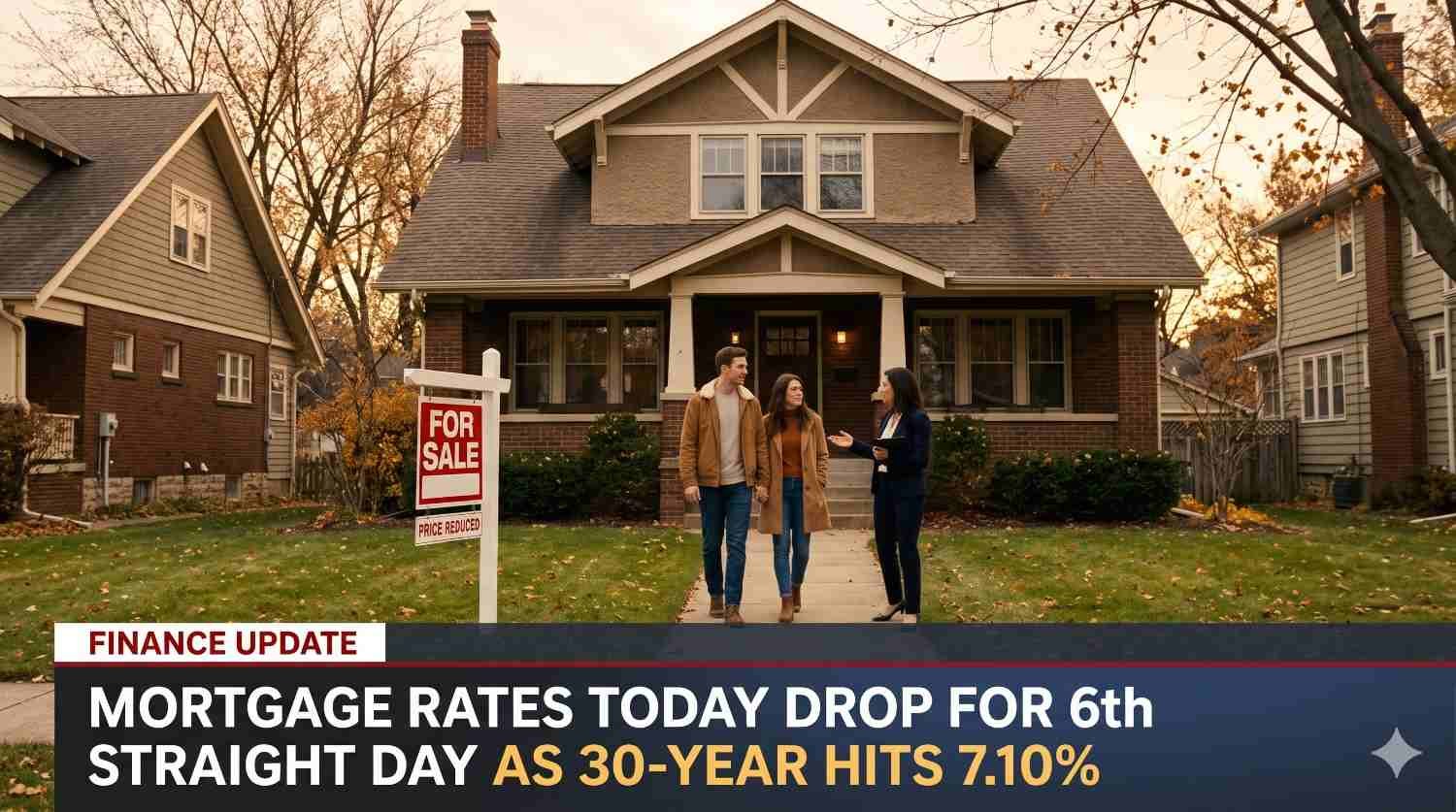
Caption: Federal housing and monetary policy data releases in Washington continue to drive weekly swings across U.S. residential mortgage rate sheets in late November 2026.
Minutes from the Federal Open Market Committee’s October meeting, published November 18 on the Federal Reserve FOMC meeting calendar, revealed that nearly all voting officials expect further monetary tightening. A minority of policymakers even noted that an increase larger than 25 basis points could warrant debate if inflation readings fail to cool.
By November 23, regulated prediction markets priced a 93% probability of a 25-basis-point rate hike on December 9, even after Treasury Secretary Scott Bessent publicly warned Sunday against overtightening. Meanwhile, softer October retail sales growth of 0.2% tempered fears of a half-point move, giving bond yields room to breathe.
Federal Regulations and 30-Year Mortgage Rates Today Precedents
How lenders quote, lock, and honor 30-year mortgage rates today is governed strictly by the Truth in Lending Act (TILA) and Real Estate Settlement Procedures Act Integrated Disclosure rules, known as TRID. Under Consumer Financial Protection Bureau Regulation Z guidelines (12 CFR Part 1026, most recently amended April 8, 2026), creditors must deliver a standardized Loan Estimate within three business days of receiving a completed application.
Under 12 CFR § 1026.37, page one of that Loan Estimate must explicitly state whether a borrower’s interest rate is locked or floating, along with the exact expiration date and time zone. Once locked, lenders cannot raise the rate before expiration unless a documented changed circumstance occurs, such as a lower-than-expected home appraisal or a drop in the applicant’s FICO Score 8 credit profile.
Separately, conforming loan eligibility continues to operate under the Federal Housing Finance Agency’s 2026 baseline ceiling of $832,750 for single-unit properties and $1,249,125 in high-cost counties. More than 50 private lenders have already introduced early 2027 limits between $845,000 and $850,000 ahead of the official federal update, while the Federal Housing Finance Agency kept 2027 multifamily caps for Fannie Mae and Freddie Mac steady at $88 billion each.
Data Breakdown & Comparative Matrix (2025 vs. 2026 Standards)
Comparing daily lender quotes against Freddie Mac’s weekly benchmark and late-2025 averages illustrates how steeply borrowing costs have reset over the past twelve months.
| Mortgage Product / Metric | Nov. 2025 Benchmark | Week Prior (Mid-Nov. 2026) | Current Rate (Nov. 23, 2026) | Weekly / Annual Shift |
| 30-Year Fixed (Daily MRC) | 6.26% (Freddie Mac) | 7.319% | 7.195% (7.241% APR) | -12 bps WoW / +93.5 bps YoY |
| 30-Year Fixed (Freddie Mac PMMS) | 6.26% | 7.11% (Nov. 12) | 7.28% (Nov. 19) | +17 bps WoW / +102 bps YoY |
| 15-Year Fixed (Daily MRC) | 5.54% (Freddie Mac) | 6.498% | 6.347% (6.416% APR) | -15 bps WoW / +80.7 bps YoY |
| 30-Year FHA Conforming | N/A | 6.714% | 6.656% (7.853% APR) | -6 bps WoW |
| 30-Year VA Loan | N/A | 6.816% | 6.746% (6.914% APR) | -7 bps WoW |
| 30-Year Jumbo Mortgage | N/A | 7.504% | 7.432% | -7 bps WoW |
| 10-Year U.S. Treasury Par Yield | ~4.25% (est. range) | 5.15% (Nov. 13) | 5.04% (Nov. 19) | -11 bps WoW |
The spread between daily 30-year mortgage rates today and the lagging weekly Freddie Mac survey highlights why real-time shopping matters during volatile Treasury weeks. Borrowers relying strictly on Thursday headline averages may overlook intraday improvements of 10 to 15 basis points offered by competing loan desks.
Government-backed mortgages also reveal sharp APR divergences that buyers must inspect closely on their Loan Estimates. While 30-year FHA loans carry an attractive 6.656% note rate, mandatory upfront and annual mortgage insurance premiums push the effective FHA APR to 7.853%—more than half a percentage point above conventional loans.
Real-World Impact: What This Means for American Households
To measure what 30-year mortgage rates today mean in concrete dollars, consider a typical American household purchasing a $400,000 primary residence with a 20% down payment ($80,000) and a $320,000 fixed-rate loan. At 7.195%, monthly principal and interest (P&I) equals exactly $2,171.04, resulting in $461,574.13 in total interest over 360 payments.
When standard escrowed property taxes ($400 monthly), homeowners insurance ($125 monthly), and routine upkeep ($333.33 monthly) are factored in, total monthly out-of-pocket housing costs reach $3,029.37. Compared with last week’s 7.319% rate ($2,197.96 monthly P&I), locking at 7.195% trims $26.92 per month—saving $323.04 per year and $9,691 over the full 30-year term.
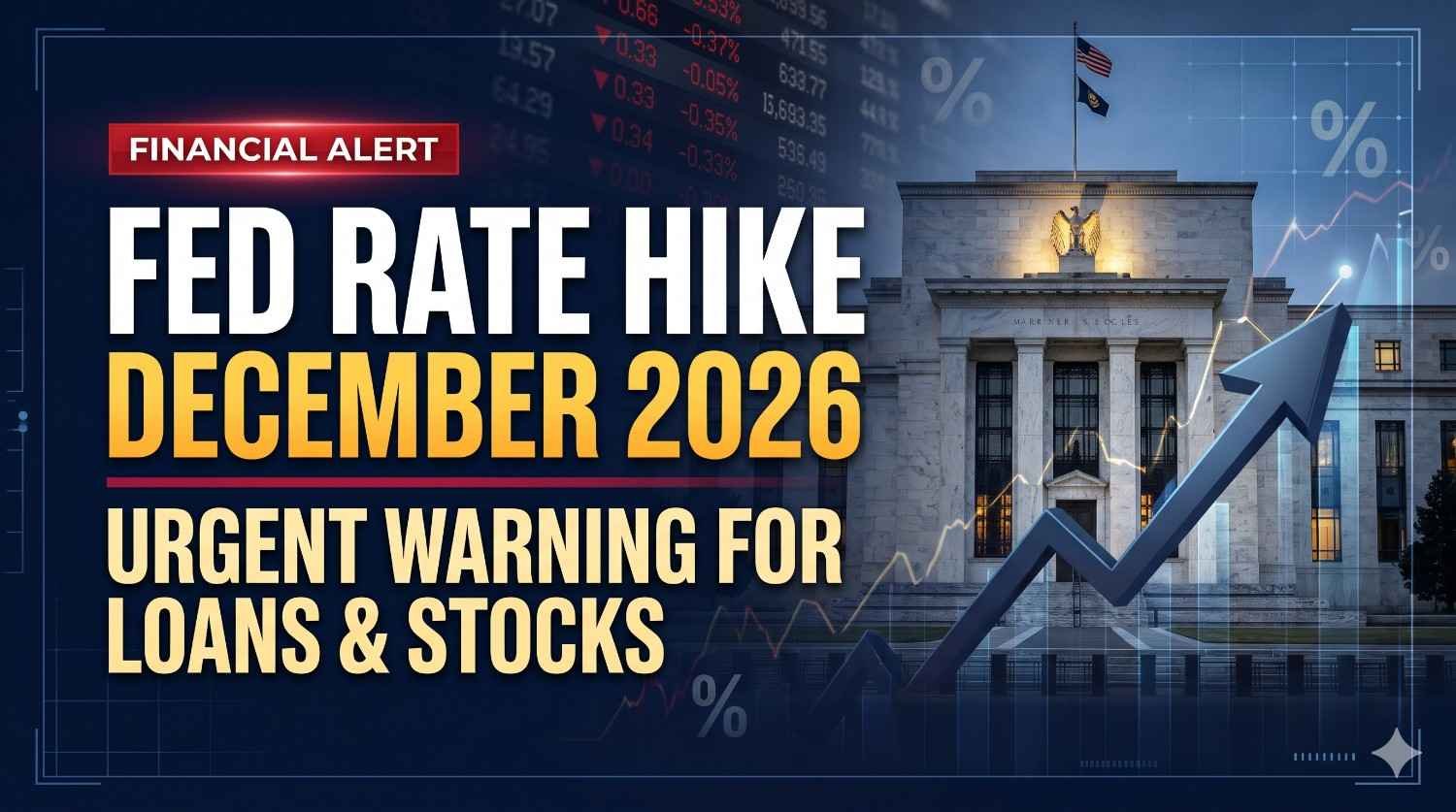
Caption: A 12-basis-point pullback saves $9,691 over 30 years on a $320,000 loan, though annual borrowing costs remain $2,384 higher than in November 2025.
Yet the year-over-year affordability squeeze remains stark for middle-income families. At November 2025’s 6.26% average, that identical $320,000 mortgage required $1,972.38 per month in principal and interest, meaning today’s buyer pays $198.66 more every month—or $71,517 in extra lifetime interest.
Floating the loan carries real downside risk ahead of December’s Fed decision. If hawkish FOMC commentary pushes 30-year rates back to 7.50%, monthly P&I on a $320,000 balance climbs to $2,237.49—adding $66.45 per month, or $23,922 across the life of the mortgage.
Regional and Demographic Breakdown Across the States
Sustained rates above 7% since September 24 have split American real estate into a sharp K-shaped divide. According to Q3 2026 Zillow housing data, national high-intent buyers per listing sank to a record low of 3.5, while entry-level buyer demand dropped 8.2% even as luxury cash-heavy segments held steady.
Sun Belt metros that boomed earlier in the decade are seeing the starkest cooling in buyer competition. Houston logged just 1.6 high-intent buyers per listing—a 9.7% annual drop—while Miami averaged 1.9 buyers per listing despite a modest rebound.
With typical single-family U.S. rent averaging $2,243 per month—roughly $360 cheaper than owning an equivalent home with 20% down—first-time buyers under age 35 are shifting heavily toward rentals, driving a 22.1% surge in rental demand. Households monitoring wage trends, federal employment bulletins, and personal finance policy shifts can track ongoing updates alongside broader economic developments at SarkariResultine.com.
Step-by-Step Actionable Checklist: How to Prepare Before the Deadline
Borrowers closing within the next 30 to 60 days face heightened rate volatility around the Thanksgiving holiday and the December 9 Federal Reserve announcement. Follow these five operational steps immediately to protect your purchasing power.
- Pull Official Loan Estimates From Three Lenders on the Same Day. Request written Loan Estimates under TILA Regulation Z from a retail bank, a local credit union, and an independent mortgage broker on the same business morning. Compare Section A origination charges and discount points side-by-side rather than judging solely by headline interest rates.
- Audit Your FICO Score 8 and Debt-to-Income Ratio. Conventional pricing tiers reward credit scores of 760 or higher with minimal loan-level price adjustments. Pay down revolving credit card balances before your lender’s credit pull to avoid paying 0.25% to 0.50% more in rate or upfront points.
- Request a 45-Day Rate Lock With a Float-Down Option. If your closing occurs before mid-January, locking 30-year mortgage rates today shields your budget against a post-FOMC yield spike. Ask whether your lender offers a one-time float-down clause—typically costing 0.125% to 0.25% of the loan amount—if market rates fall at least 25 basis points before closing.
- Evaluate Seller Concessions Instead of Paying Out-of-Pocket Points. With buyer traffic at a record-low 3.5 per listing, sellers in slower metros often agree to fund temporary 2-1 rate buydowns or closing credits. Negotiating a 2% seller credit on a $400,000 purchase delivers $8,000 to buy down your effective first-year interest rate without draining cash reserves.
- Verify Weekly Benchmark Trends via Official Federal Data. Before signing your rate lock confirmation, check the historical spread between Treasury yields and conforming mortgages on the Federal Reserve Bank of St. Louis FRED database to ensure your lender’s quote aligns with national averages.
Critical Timeline, Enforcement Dates & What Happens Next
Mortgage pricing over the next six weeks hinges on a compressed schedule of federal housing releases, inflation prints, and central bank decisions.
- November 25, 2026 (11:00 a.m. CST): Freddie Mac and the St. Louis Fed release the pre-Thanksgiving weekly PMMS update, capturing whether Monday’s dip pulls the official weekly index below 7.28%.
- Late November 2026: The Federal Housing Finance Agency is expected to announce official 2027 single-family conforming loan limits, historically published around November 25.
- December 8–9, 2026: The Federal Open Market Committee convenes in Washington and issues its rate decision plus updated Summary of Economic Projections at 2:00 p.m. EST on December 9.
- First Half of 2027: Zillow economists project that sticky shelter inflation will keep 30-year mortgage rates today anchored above 7% until at least mid-2027, while RSM analysts warn the 10-year Treasury could retest its October 5 peak of 5.30% if the Fed hikes in both December and March.
Official Primary Sources & Verification Links
- Freddie Mac Primary Mortgage Market Survey (PMMS) — Weekly national averages for 30-year and 15-year fixed conforming loans as of November 19, 2026.
- Federal Reserve Bank of St. Louis (FRED) — MORTGAGE30US Series — Historical weekly U.S. 30-year fixed-rate mortgage archive and November 25 release schedule.
- Board of Governors of the Federal Reserve System — FOMC Calendars & Minutes — Official October FOMC minutes (released November 18, 2026) and December 8–9 meeting schedule.
- Consumer Financial Protection Bureau — 12 CFR Part 1026 (Regulation Z / TRID) — Federal rules governing mortgage Loan Estimates, APR calculations, and rate lock disclosures.
- Federal Housing Finance Agency (FHFA) — 2027 Enterprise Loan Cap Announcement — Official November 23, 2026 release confirming $176 billion in combined 2027 multifamily caps for Fannie Mae and Freddie Mac.
Frequently Asked Questions (People Also Ask)
Should I lock my mortgage rate today at 7.195% or wait?
Homebuyers scheduled to close within 30 to 45 days face greater upside risk than downside reward by floating ahead of the December 9 Federal Reserve decision. Locking 30-year mortgage rates today secures a 12-basis-point discount off last week’s average while protecting your monthly payment if markets react sharply to a December rate hike.
Why did 30-year mortgage rates drop if the Fed is expected to hike?
Mortgage rates track daily movements in the 10-year U.S. Treasury yield and mortgage-backed securities rather than waiting for the Federal Reserve’s official vote. Because the 10-year Treasury par yield eased from 5.15% to 5.04% following modest 0.2% October retail sales growth, lenders trimmed daily retail quotes.
What is the monthly payment on a $400,000 house at 7.195%?
With a 20% down payment ($80,000) and a $320,000 30-year fixed loan at 7.195%, monthly principal and interest totals $2,171.04. Including typical property taxes, homeowners insurance, and routine maintenance, total monthly housing expenses average roughly $3,029.37.
Are 30-year mortgage rates expected to drop below 7% in 2027?
Major housing forecasts remain cautious due to persistent shelter inflation and tighter monetary policy. Zillow expects 30-year fixed rates to stay above 7% through mid-2027, though slower inflation or softer economic growth next year could bring gradual relief.
What is the conforming loan limit for a conventional mortgage right now?
The official FHFA baseline conforming loan limit for a single-unit home remains $832,750 across most U.S. counties, rising to $1,249,125 in designated high-cost areas. More than 50 lenders are already honoring early 2027 limits up to $850,000 while awaiting FHFA’s formal late-November announcement.













Leave a Reply