


WASHINGTON — Every 48-hour delay after discovering a breached checking account or stolen debit card can multiply your legal out-of-pocket loss tenfold—from $50 to $500, or your entire drained balance. Mastering fast hacked bank account recovery right now decides whether your bank absorbs the hit or leaves your household absorbing thousands in vanished cash and ruined loan terms.
Federal Trade Commission Consumer Sentinel Network data released in 2026 shows Americans reported $15.9 billion in fraud losses across 3 million complaints in 2025, with imposter scams alone draining $3.5 billion. Meanwhile, the FBI’s April 2026 Internet Crime Report logged 18,774 credit card and check fraud complaints totaling $282.7 million in direct losses.

Key Financial Takeaways (At a Glance):
- Who Is Impacted: Any U.S. consumer holding checking, savings, debit, credit card, or P2P-linked accounts.
- Official Rule Benchmark: Federal Regulation Z caps credit card fraud at $50; Regulation E sets tiered $50, $500, and unlimited debit liability.
- Critical Deadline: Report lost debit access within 2 business days; report statement errors within 60 days.
- Governing Law & Agencies: EFTA, TILA, FCRA; overseen by the CFPB, FTC, FDIC, and NCUA.
- Dollar Impact: Acting fast protects $4,000+ in checking balances and prevents 60-to-110-point FICO score drops.
- Smart First Move: Freeze cards in-app before the 5:00 PM EST wire/ACH cutoff and log an oral plus written dispute.
Hacked Bank Account Recovery: Official Rules, Federal Policies, and What Just Changed
Two major regulatory shifts in 2025 and 2026 rewrote the playbook for American account holders fighting unauthorized transfers. First, on March 4, 2025, the Consumer Financial Protection Bureau (CFPB) dismissed its federal lawsuit against Zelle operator Early Warning Services, JPMorgan Chase, Bank of America, and Wells Fargo. Two months later, on May 11, 2025, Congress and the White House used the Congressional Review Act to nullify the CFPB’s rule placing large nonbank digital payment apps under direct bureau supervision.
That federal pullback means traditional advice assuming government regulators will automatically force peer-to-peer apps to refund scammed cash no longer holds up in late 2026. Instead, consumer protection now relies heavily on statutory timelines enforced under CFPB Regulation E (12 CFR Part 1005) and bank-level ACH fraud screening.
There is one major enforcement upgrade working in your favor across the U.S. payment rails. Nacha’s mandatory 2026 Fraud Monitoring Rules took full effect in two phases—March 20, 2026 for high-volume institutions processing over 6 million ACH transactions, and June 19, 2026 for all remaining ACH originators and third-party processors. Banks and payroll processors must now flag anomalous account takeovers and tag ACH entries with standardized “PAYROLL” and “PURCHASE” codes, creating an auditable trail when you challenge an unauthorized bank debit.
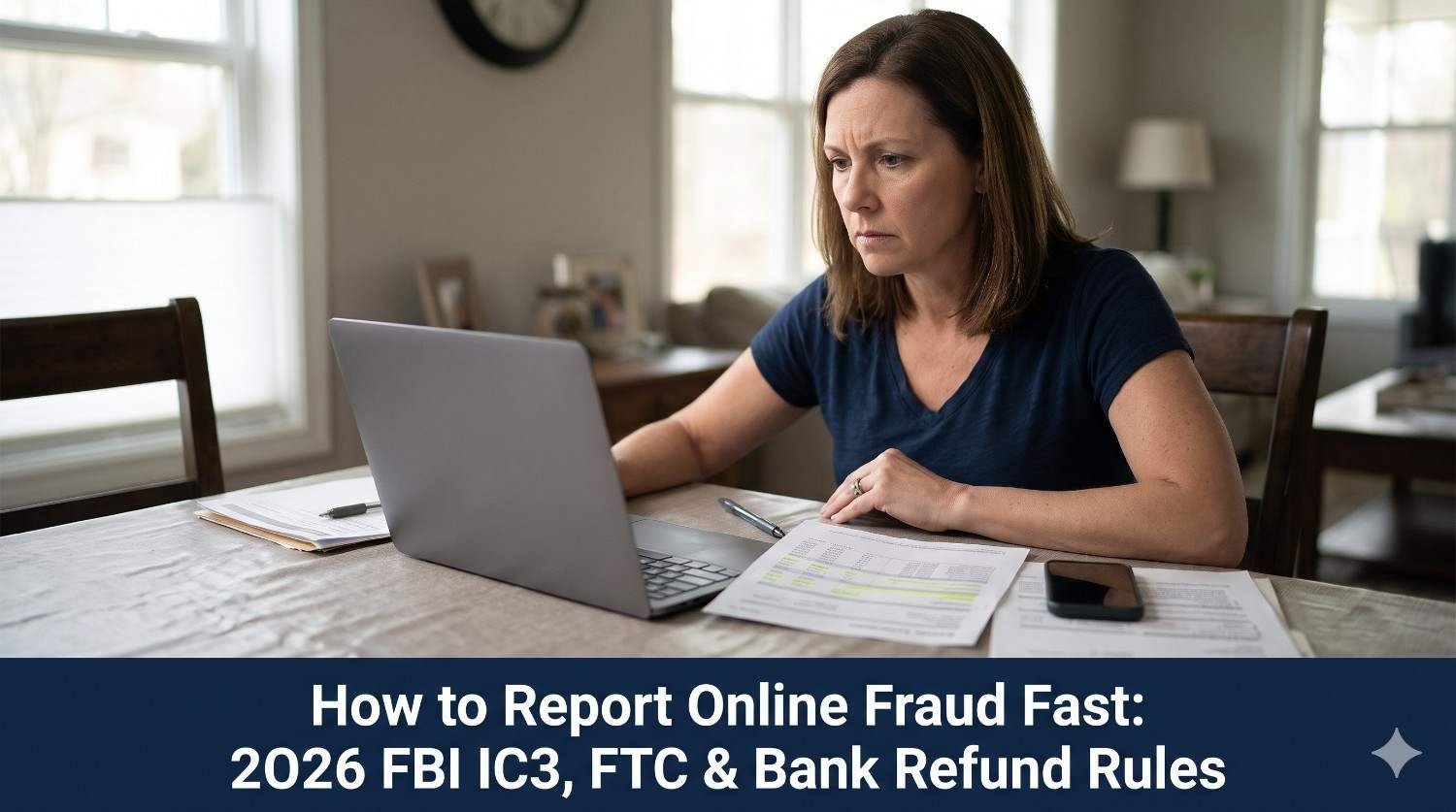
Caption: Federal banking regulations under Regulation E, Regulation Z, and Nacha’s 2026 ACH monitoring rules establish strict statutory clocks for disputing unauthorized U.S. account withdrawals.
Federal Protections, Government Programs, and Hacked Bank Account Recovery Requirements
American banking law splits payment hacks into two sharply different legal worlds. When a thief compromises your credit card, you are spending the bank’s money—and the Truth in Lending Act (TILA) plus Regulation Z (12 CFR § 1026.12) cap your maximum legal liability at $50, regardless of whether you report the fraud in two hours or two weeks. Major networks like Visa, Mastercard, American Express, and Discover layer voluntary $0 zero-liability policies on top of that federal floor.
When a hacker drains your checking or savings account via debit card, ACH routing number, or stolen login credentials, the Electronic Fund Transfer Act (EFTA) and Regulation E (12 CFR § 1005.6) govern your recovery. If your physical debit card is stolen and you notify your bank within two business days, your liability caps at $50. Miss that two-day mark and your exposure jumps to $500; fail to report an unauthorized debit within 60 days of your periodic statement transmittal and your liability becomes legally unlimited for subsequent transfers.
Former Underwriter Reality Check: FDIC and NCUA deposit insurance (up to $250,000 per depositor, per insured bank or credit union) protects you ONLY if your financial institution fails—it provides zero reimbursement for cyber theft, phishing, or unauthorized wire transfers.
Inside the bank’s fraud department, investigators also cross-check your dispute against your credit and deposit profile. Under the Fair Credit Reporting Act (FCRA), you have the statutory right to place a free security freeze at Equifax, Experian, TransUnion, and deposit-screening bureau ChexSystems, plus a free 1-year initial fraud alert or 7-year extended fraud alert backed by an FTC Identity Theft Report.
Complete hacked bank account recovery also depends on sanitizing your lending file before applying for a mortgage or auto loan. Bank underwriters pull FICO Score 8, FICO Score 10T, and VantageScore 4.0 alongside your front-end and back-end Debt-to-Income (DTI) ratios. If a hacker maxes out a $10,000 credit line, your credit utilization spikes and your DTI inflates overnight—potentially knocking a borrower from the Very Good tier (740–799) down to Fair (580–669) or Subprime (under 580) before the dispute clears.
Yet statutory caps tell only half the story—how your bank classifies the payment rail decides whether you get your money back in 10 business days or lose every cent.
2025 vs. 2026 Rate, Fee & Liability Matrix (Side-by-Side Breakdown)
| Account / Payment Rail | Governing US Law | Max Consumer Liability Cap | Statutory Reporting Window | Bank Investigation & Provisional Credit | 2025 vs. 2026 Policy Shift |
| Credit Card (Unauthorized) | TILA / Reg Z (12 CFR 1026) | $50 max ($0 via card network policy) | 60 days from statement date (written notice required) | Charge withheld immediately; 30 days to acknowledge, 90 days to resolve | Steady federal floor; card-not-present e-skimmer fraud rose sharply |
| Debit Card / ACH (Lost Card or Hack) | EFTA / Reg E (12 CFR 1005) | $50 (within 2 business days) / $500 (days 3–60) / Unlimited (after 60 days) | 2 business days for card theft; 60 days from statement | 10 business days for provisional credit; up to 45 days to resolve (90 days new accounts) | Nacha Phase 1 & 2 (March/June 2026) mandate strict ACH fraud monitoring |
| Bank Account Login Hack (No Stolen Card) | EFTA / Reg E (12 CFR 1005.6) | $0 if reported within 60 days of statement; Unlimited after 60 days | 60 days from statement transmittal | 10 business days provisional credit; 45 days final resolution | Higher bank scrutiny on device ID and IP address logs during disputes |
| Zelle / P2P / FedNow (Induced Scam) | Bank User Agreement (Exempt from Reg E if user clicks “send”) | Up to 100% loss (voluntary bank goodwill only) | Immediate (minutes matter before settlement) | No federal provisional credit mandate if bank deems transfer “authorized” | CFPB dropped Zelle suit (Mar 2025); Congress voided P2P rule (May 2025) |
| 1099 / Business Checking Account | UCC Article 4A (State Commercial Code) | 100% possible if bank followed agreed security procedure | Often 24 hours to 30 days per commercial deposit contract | Zero Reg E provisional credit guarantee | Nacha 2026 rules tighten ODFI/originator vendor-change verification |
Look closely at row two versus row four in that matrix—that is where American households hemorrhage billions. Under current federal underwriting and compliance rules, hacked bank account recovery is remarkably forgiving when a hacker breaks into your login or steals your card number without your knowledge, because Regulation E mandates provisional credit within 10 business days.
The moment you read a six-digit one-time passcode aloud to a fake “bank fraud representative” or initiate a Zelle transfer yourself to “protect your funds,” banks routinely reclassify the theft as an authorized payment. Even worse, debit disputes carry zero federal billing-error protection for undelivered goods or rogue subscriptions—unlike credit cards under 12 CFR § 1026.13.
Credit score tiers compound this hidden risk. A borrower sitting in the Exceptional tier (800+) or Very Good tier (740–799) who ignores a hacked checking account can suffer cascading bounced autopays on a car loan or mortgage, plunging into the Fair tier (580–669) and paying 1.25% to 2.50% higher APR on future borrowing.
Just how expensive does a five-day delay become in real household dollars? The side-by-side borrower math exposes a five-figure trap most Americans never calculate.
Real-World Dollar Math: Exact Cost & Savings Scenarios for American Borrowers
To see how hacked bank account recovery timing alters lifetime borrowing costs, compare two realistic American homeowners hit by an identical $4,200 account breach two weeks before applying for a $350,000 30-year fixed mortgage.
Borrower A (Credit Card Hacked — Reported Within 4 Hours):
- Starting Profile: 745 FICO Score 8 (Very Good tier), 34% back-end DTI, $15,000 credit limit.
- Incident & Action: Thief charges $4,200 online. Borrower locks the card in-app at 1:00 PM EST, files an oral and written Regulation Z dispute, and freezes all three credit bureaus.
- Direct Out-of-Pocket Loss: $0 (protected by Regulation Z $50 statutory cap and issuer $0 liability).
- Downstream Borrowing Impact: Issuer suppresses the disputed balance from bureau reporting; mortgage locks at 6.35% APR ($2,178/month principal and interest).
Borrower B (Debit Card & Checking Hacked — Reported on Day 5):
- Starting Profile: 745 FICO Score 8, 34% back-end DTI, $4,600 checking balance linked to autopay.
- Incident & Action: Thief steals debit card details and withdraws $4,200 across days 1–4. Borrower notices on Day 5—missing the 2-business-day Regulation E window. Before provisional credit arrives on business day 10, a $480 auto loan autopay bounces and triggers a 30-day delinquency.
- Direct Out-of-Pocket Loss: $500 Regulation E statutory liability cap plus $105 in overdraft and returned-item fees ($605 immediate loss).
- Downstream Borrowing Impact: The 30-day late auto mark drops Borrower B’s FICO Score 8 by 85 points to 660 (Fair tier). Their $350,000 mortgage rate jumps to 6.85% APR ($2,293/month)—an extra $115 per month, or $41,400 in additional interest over 30 years.
Net Lifetime Dollar Difference: $42,005 lost solely because the breach hit a debit rail with a five-day reporting delay instead of a credit card with an immediate freeze.
Caption: Reporting a compromised checking account past the 2-business-day Regulation E deadline can trigger $500 liability caps, bounced autopays, and tens of thousands in higher mortgage interest.
Hidden Lender Traps, Tax Consequences, and Overlooked Edge Cases
Complicating hacked bank account recovery even further, banks and the IRS enforce harsh fine-print rules that mainstream finance blogs routinely leave out:
- The Credit Card Cash Advance Trap: Under 12 CFR § 1026.2(a)(15), fraudulent cash advances are treated differently from merchandise purchases and begin accruing 24% to 30% APR immediately with no grace period. Demand written confirmation that both principal and accrued cash-advance interest are reversed.
- IRS Tax Shock & Form 4684 Limits: In July 2025, Congress permanently extended the restriction barring federal tax deductions for personal theft losses outside federally or state-declared disasters. Under IRS Chief Counsel Memorandum 202511015 (March 2025), victims can only deduct unrecovered fraud losses on IRS Form 4684 under IRC § 165(c)(2) if the theft arose from a profit-motivated transaction—such as a compromised investment account, phishing theft, or investment scam—not personal romance or ransom schemes.
- Form 1099-C and Form 1099-R Fallout: If a lender settles a fraudulent credit card or personal loan as “forgiven debt” instead of identity theft, they may issue IRS Form 1099-C, creating phantom taxable income. Likewise, if hackers liquidate a 401(k) or IRA, you will receive Form 1099-R and must file a police report plus a written disclosure statement to fight wrongful early-withdrawal penalties.
- 1099 Self-Employed & Retiree Edge Cases: Sole proprietors using commercial checking accounts fall under state UCC Article 4A rather than consumer Regulation E, leaving far shorter dispute windows. Retirees whose Social Security direct deposit is hijacked must contact the Social Security Administration directly—not just their bank—to reroute future monthly benefits. Active-duty service members can activate a free 1-year Active Duty Fraud Alert under the FCRA to block unauthorized loans while deployed.
For ongoing trackers covering federal consumer protection shifts, banking policy alerts, and official U.S. financial bulletins, readers can monitor updates through SarkariResultine.com/us.
Knowing the traps is only valuable if you execute your containment steps in the exact order bank compliance teams require.
Step-by-Step Approval & Savings Blueprint: Exact Moves to Make Right Now
Executing a disciplined hacked bank account recovery sequence within the first 24 hours preserves every federal protection under Regulation E, Regulation Z, and the FCRA. Follow these six steps in strict order:
- Lock Cards & Halt Outgoing Rails (Minutes 0–15): Open your banking app immediately and toggle “Lock Card” or “Freeze Account.” If an unauthorized wire or ACH transfer is pending, call the bank’s 24/7 fraud desk before the 5:00 PM EST (2:00 PM PST) Federal Reserve wire/ACH settlement cutoff to request an emergency recall.
- File an Oral AND Written Dispute (Hour 1): Under Regulation E, oral phone notice stops the liability clock immediately—record the representative’s name, claim number, and timestamp. For credit cards, Regulation Z requires written notice sent to the issuer’s billing-error address (not the payment remittance address) within 60 days to lock in full statutory rights.
- Freeze All Four Consumer Bureaus Free (Hour 2): Place a free FCRA security freeze online at Equifax, Experian, and TransUnion—remembering that freezes do not carry over between bureaus. Simultaneously place a free security freeze at ChexSystems so hackers cannot open fraudulent checking accounts in your name.
- Audit Credit Files & File Federal Reports (Day 1): Pull your free weekly credit reports at AnnualCreditReport.com to spot unauthorized hard inquiries or new tradelines. Immediately generate an official FTC Identity Theft Report at IdentityTheft.gov—which unlocks your 7-year extended fraud alert and forces bureaus to block fraudulent accounts—and log cyber theft over $1,000 with the FBI’s Internet Crime Complaint Center.
- Lock Your IRS Tax Account & Reroute Autopays (Days 2–3): Opt into the IRS Identity Protection PIN (IP PIN) program online so thieves cannot file a fake Form 1040 refund using your Social Security number. If your SSN was already abused for fraudulent taxes or employment, submit IRS Form 14039 (Rev. Feb 2026). Move W-2 payroll direct deposits and mortgage/auto autopays to a fresh checking account number immediately.
- Enforce the 10-Day Credit Clock & Escalate Denials (Days 10–45): Calendar 10 business days from your debit dispute date. If your bank fails to issue provisional credit or wrongfully denies a clearly unauthorized transfer, demand their written investigation packet under 12 CFR § 1005.11 and file a formal regulatory complaint with the Consumer Financial Protection Bureau and your State Attorney General.
Once your immediate accounts are sealed, several upcoming 2026–2027 federal calendar dates will shape both your borrowing costs and your long-term legal leverage.
2026–2027 Key Financial Deadlines, Fed Calendar & What Happens Next
Policy shifts directly influence hacked bank account recovery rights, credit-scoring recovery speeds, and the rates you pay on replacement financial products over the next 14 months. Mark these verified federal dates:
- December 8–9, 2026 (Federal Reserve FOMC Meeting): The FOMC announces its final 2026 interest rate decision on Wednesday, December 9, 2026 at 2:00 PM EST. Any benchmark rate move directly resets variable credit card APRs and High-Yield Savings Account (HYSA) yields if you are opening fresh replacement accounts.
- January 26–27, 2027 (First 2027 FOMC Window): Under the Federal Reserve’s revised tentative 2027 calendar released November 12, 2026, the committee convenes eight times in 2027—starting January 26–27, followed by March 16–17 and April 27–28.
- Early January 2027 (IRS IP PIN Annual Refresh): Taxpayers enrolled in the IRS IP PIN program receive their new 6-digit annual PIN in early January, required before e-filing any 2026 federal tax return.
- April 15, 2027 (IRS Tax Filing & Form 4684 Deadline): Deadline to file 2026 Form 1040 returns, claim eligible IRC § 165(c)(2) profit-motivated theft losses on Form 4684, or contest fraudulent Form 1099-C/1099-R filings.
- Late 2026–2027 (CFPB Section 1033 Open Banking & Credit Models): Following the CFPB’s August 2026 submission of its revised Section 1033 Open Banking proposal to OIRA, watch for updated rules governing third-party fintech data access—reducing screen-scraping login hacks. Meanwhile, mortgage lenders transitioning toward FICO Score 10T and VantageScore 4.0 weigh 24 months of trended payment data, making fast removal of fraudulent late marks essential before locking a 2027 loan.
Before taking action or submitting personal documents anywhere online, bookmark only verified primary government domains to avoid secondary “recovery scam” traps.
Official Government Resources & Primary Financial Verification Links
Verify every hacked bank account recovery step directly through these official federal and federally mandated portals:
- Consumer Financial Protection Bureau (CFPB) Complaint Portal — File formal disputes against banks, credit unions, and card issuers violating Regulation E or Regulation Z.
- Federal Trade Commission — IdentityTheft.gov — Generate your official federal Identity Theft Report and customized recovery plan.
- AnnualCreditReport.com (Federally Authorized Portal) — Pull free official credit reports from Equifax, Experian, and TransUnion.
- Internal Revenue Service — Form 14039 & IP PIN — Submit a tax Identity Theft Affidavit or enroll in annual IP PIN protection.
- Federal Deposit Insurance Corporation (FDIC) — Confirm bank charter status and submit regulatory inquiries for FDIC-supervised state banks.
- National Credit Union Administration (NCUA) — Escalate unresolved unauthorized transfer complaints against federally insured credit unions.
- Federal Reserve FOMC Official Calendar — Track 2026–2027 benchmark rate announcements affecting card APRs and deposit yields.
- FBI Internet Crime Complaint Center (IC3) — Report wire fraud, account takeovers, and cyber financial crimes for federal law enforcement tracking.
Frequently Asked Questions (People Also Ask)
Does a hacked credit card or bank account hurt my credit score?
Proper hacked bank account recovery shields your credit score, because bank account theft itself is not reported to credit bureaus unless an unpaid overdraft goes to collections. For hacked credit cards, disputed balances do not permanently damage FICO scores once removed—provided you keep legitimate autopays current so no 30-day late payments post.
Will my bank refund money if a scammer tricked me into sending a Zelle transfer?
Under current Regulation E interpretations, banks generally classify transfers you personally initiated—even under deception—as authorized payments, meaning they are not federally required to refund the money. However, if a hacker broke into your account without your credentials and sent a Zelle transfer themselves, Regulation E protects you as an unauthorized electronic fund transfer.
Can I deduct stolen bank account or scam losses on my 2026 federal taxes?
Most personal theft losses remain non-deductible after Congress permanently extended TCJA restrictions in July 2025. Under IRS Chief Counsel Memorandum 202511015, you may only claim an unrecovered theft loss on Form 4684 under IRC § 165(c)(2) if the loss occurred in a profit-motivated transaction, such as a compromised investment account or phishing theft.
How long does a bank have to return stolen money under Regulation E?
After you report an unauthorized debit card or ACH withdrawal, federal Regulation E gives your bank 10 business days to investigate. If the bank needs more time—up to 45 calendar days, or 90 days for new accounts and international transfers—it must deposit provisional credit into your account while finishing its review.
Should I close my compromised checking account or just replace my debit card?
If only your physical debit card number was skimmed at a gas pump or online retailer, canceling and reissuing the card is usually sufficient. If a hacker gained access to your online banking login, routing number, or check images, close the entire checking account and open a fresh account number immediately to stop recurring unauthorized ACH debits.
Editorial Financial Disclosure: Federal regulations, interest rates, tax statutes, and institutional dispute policies are subject to change; this investigative report is provided strictly for informational and educational purposes and does not constitute personalized financial, tax, or legal advice.






Leave a Reply