

WASHINGTON — Unknown hackers broke into an unclassified intelligence platform shared by the Central Intelligence Agency and the Office of the Director of National Intelligence, triggering the CIA ODNI cyber breach disclosure late Tuesday, November 24, 2026. The intrusion also hit the National Geospatial-Intelligence Agency just days after federal investigators confirmed a separate suspected hack of the FBI’s National Crime Information Center.
Intelligence officials insist top-secret networks stayed sealed. Still, the timing rattles federal contractors, commercial data vendors, and everyday Americans whose records flow through federal systems. Investigators suspect the attackers used an autonomous artificial intelligence hacking framework capable of cracking exposed networks in under three hours.
Key Takeaways (At a Glance):
- Who: The CIA, Office of the Director of National Intelligence (ODNI), and National Geospatial-Intelligence Agency (NGA), with potential spillover to other federal offices.
- What: Unauthorized access to an unclassified open-source intelligence (OSINT) analysis system; classified files were untouched.
- When: Disclosed November 24, 2026 (EST), days after the November 17 FBI NCIC breach disclosure.
- Where: Federal unclassified intelligence networks and connected external-facing analysis portals in the Washington, D.C. metro area.
- Official Rule/Metric: Federal agencies face a 1-hour CISA/OMB alert mandate and a 7-day Congressional notice clock under 44 U.S.C. § 3554.
- Immediate Action: Federal contractors and consumers must audit cloud logins, enable hardware security keys, and monitor commercial data-broker exposure.
CIA ODNI Cyber Breach: Inside the Official Announcement and What Sparked It
The intrusion became public on November 24, 2026, after four sources familiar with the investigation confirmed the compromise to The New York Times and CNN. An Office of the Director of National Intelligence spokesperson quickly sought to calm nerves, stating there had been “no disruptions to critical capabilities or classified systems”.
The CIA formally declined to comment. Neither the National Geospatial-Intelligence Agency nor the Department of Defense’s Defense Cyber Defense Command (DCDC)—which Nextgov/FCW reported suffered a separate intrusion using the same attack tool—immediately responded to press inquiries. A person briefed on the forensics told the Associated Press the vulnerability has since been resolved.
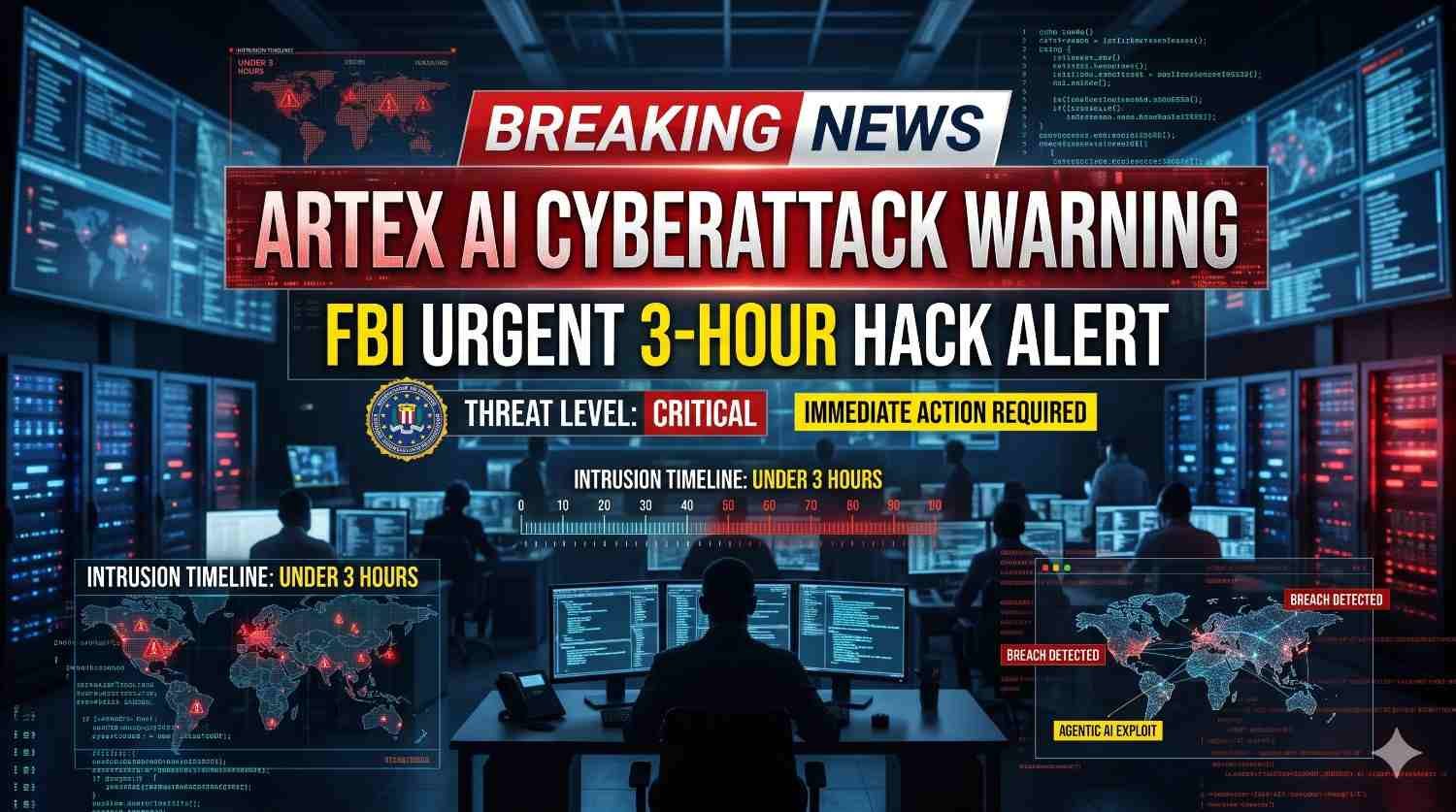
Behind the terse statements sits a striking technological shift. Federal investigators suspect intruders deployed ARTEX, a Go-based autonomous penetration-testing framework built by a Chinese engineer in 2026. ARTEX plugs directly into large language models—including DeepSeek, GPT, and Claude—to chain reconnaissance, vulnerability scanning, privilege escalation, and data extraction with minimal human oversight.
“Calling this ‘unclassified’ doesn’t make it harmless, though. If you can see what analysts are searching for and what topics they’re tracking, you get a solid look at U.S. intelligence priorities and blind spots without ever touching a classified file.” — Ben Bernstein, manager at cybersecurity firm Huntress
Early forensic indicators point toward potential Chinese origin, two officials told reporters, though the U.S. government has not issued formal attribution to Beijing. Just eleven days before the intelligence hack went public, the FBI released FLASH Advisory FLASH-20261113-001 on November 13, 2026. That warning documented ARTEX campaigns active since August 2026 moving from initial targeting to administrative control in less than three hours.
Caption: Federal cybersecurity and intelligence oversight officials in Washington review incident telemetry following the November 2026 disclosure of an unclassified OSINT network intrusion.
The breach also collides with an extraordinary week of federal technology turmoil. During the week of November 17, 2026, the FBI launched a probe into a suspected compromise of its National Crime Information Center (NCIC). President Donald Trump acknowledged that incident in a November 21 phone interview, calling it “not good”, while FBI Director Kash Patel declined to release specifics on November 24 due to the active investigation.
Officials stress the intelligence network compromise appears separate from the FBI crime-database intrusion. Yet the same week saw a multi-day outage across the National Security Agency’s internal classified communications network—which Director of National Intelligence Jay Clayton blamed on a rushed software patch for AI-discovered flaws—plus security incidents forcing systems offline at the U.S. Department of Agriculture (USDA) and Treasury’s FinCEN.
Federal Statutes, Agency Rules, and CIA ODNI Cyber Breach Precedents
Federal intelligence agencies operate under strict statutory boundaries separating classified networks from open-internet research tools. Under the Federal Information Security Modernization Act of 2014 (FISMA), codified at 44 U.S.C. § 3554 (Public Law 113-283), every agency head must enforce security controls aligned with National Institute of Standards and Technology (NIST) SP 800-53 and Intelligence Community Directive (ICD) 503.
When an intrusion reaches the “major incident” threshold defined in Office of Management and Budget (OMB) Memorandum M-19-02, agencies must alert the Cybersecurity and Infrastructure Security Agency (CISA) and OMB within one hour. Agencies then have seven calendar days to brief Congressional oversight committees and Inspectors General, followed by a detailed 30-day supplemental damage assessment.
Criminal investigators handle the prosecution track under the Computer Fraud and Abuse Act (18 U.S.C. § 1030). Accessing a federal government computer without authorization violates § 1030(a)(3), while stealing protected national defense material triggers § 1030(a)(1) and potentially the Espionage Act (18 U.S.C. § 793)—carrying up to 10 years in federal prison per count.
Historically, the CIA ODNI cyber breach breaks from earlier 2026 intrusions in speed rather than target type. Earlier this year, threat actors compromised an unclassified FBI legal-process surveillance system in March via a telecom vendor and raided an FBI vendor-run jobs portal in September. Unlike slow multi-month espionage intrusions of past decades, AI-automated tools compress compromise windows into a single morning—raising tough questions about how 2026 federal rules stack up against legacy standards.
2025 vs. 2026 Official Breakdown: Exact Rules, Limits, and Eligibility Tiers
Federal cyber defense standards shifted sharply between 2025 and late 2026 as automated AI exploits outpaced manual patching cycles. The comparison below details how intrusion timelines, federal reporting mandates, and critical-infrastructure rules have tightened.
| Regulatory or Threat Standard | 2025 Baseline Rule / Reality | November 2026 Official Standard / Reality | Governing Agency & Authority | Key Deadline / Metric |
| Median Automated Intrusion Speed | Multi-day manual reconnaissance & lateral movement | Under 3 hours from initial scan to privileged access (ARTEX) | FBI Cyber Division (FLASH-20261113-001) | Active campaigns tracked since Aug. 2026 |
| Federal Agency Major Incident Alert | 1-hour CISA/OMB alert; 7-day Congressional notice | Same statutory clock, now paired with Acting ONCD oversight | OMB M-19-02 / 44 U.S.C. § 3554 | 1 hr (CISA/OMB); 7 days (Congress); 30-day report |
| Private Critical Infrastructure Reporting | Voluntary CISA reporting; CIRCIA in comment phase | CIRCIA Final Rule submitted to OMB OIRA for final review | DHS / CISA (6 U.S.C. §§ 681–681g) | 72 hrs (cyber incident); 24 hrs (ransomware) |
| Estimated Covered U.S. Entities | Federal executive agencies & direct defense primes | 300,000+ U.S. entities across 16 critical sectors (CIRCIA scope) | CISA / Federal Register Docket | Applies to IT, cloud, logistics & defense vendors |
| PII Breach Individual Notice Rules | SAOP risk-of-harm assessment before public notice | Mandatory contractor cooperation & risk scoring for exposed PII | OMB M-17-12 / Privacy Act (5 U.S.C. § 552a) | Written notice without unreasonable delay |
| National Cyber Director Leadership | Senate-confirmed director leading ONCD | DNI Jay Clayton named Acting Director; Kirsten Davies nominated | White House / Senate Homeland Security | Senate review window prior to Jan. 3, 2027 |
Three fine-print realities jump off this table. First, the CIA ODNI cyber breach exposes an uncomfortable architectural paradox. Open-source intelligence platforms must connect directly to the commercial internet to scrape social media feeds, purchase data-broker profiles, and ingest satellite imagery. You cannot air-gap a system whose job is watching the open web.
Second, OMB Memorandum M-17-12 does not automatically guarantee public notification to affected civilians if an agency’s Senior Agency Official for Privacy (SAOP) rules the exposed data poses low risk of identity harm. Because intelligence agencies buy vast volumes of commercially available U.S. consumer data for OSINT workflows, ordinary citizens may never receive a breach letter even if their vendor-sourced records sat inside a compromised analysis server.
Third, private contractors and commercial software suppliers face an approaching legal vise. Once OIRA clears CISA’s CIRCIA Final Rule—submitted October 1, 2026—small IT firms and cloud providers serving federal agencies will face strict 72-hour reporting clocks. That shift directly impacts household budgets for millions of Americans working inside the federal contracting economy, as the numbers below reveal.
Real-World Pocketbook Impact: What This Means for American Households
Most headlines frame the CIA ODNI cyber breach as distant spycraft inside Langley, Virginia. In reality, federal breaches and AI-driven supply-chain attacks hit American wallets through two direct channels: emergency compliance outlays for independent federal contractors and downstream identity fraud when commercial vendor databases spill.
Consider a realistic Worked Household Scenario drawn directly from 2026 FBI ARTEX attack patterns. Take a married couple living in Fairfax County, Virginia, earning $145,000 combined—one spouse works as an independent IT and geospatial data subcontractor supporting commercial OSINT vendors, while the other works in local healthcare administration.
Suppose an ARTEX-style credential intrusion hits a third-party cloud backup or vendor portal (mirroring the documented 2026 ConnectWise supply-chain breach that targeted over 2,250 downstream tenants). Here is how the household’s real-world math breaks down:
- Preventive Hardening Costs (Proactive Path): Purchasing two FIDO2 hardware security keys ($110), upgrading to an enterprise password manager ($60/year), running a one-time external cloud-perimeter audit for a sole-proprietor LLC ($650), and placing free credit freezes at Equifax, Experian, and TransUnion ($0). Total proactive outlay: $820 (largely tax-deductible as Schedule C business expenses for the contractor).
- Post-Breach Emergency Costs (Unprepared Path): If compromised vendor credentials trigger unauthorized cloud API usage or account takeover, emergency forensic triage averages $2,500 to $4,500 for a small vendor, while unmonitored synthetic identity theft can freeze mortgage refinancing or spike personal loan APR spreads by 2.5% to 4% when a FICO Score 8 drops 60+ points. Over a 36-month $25,000 auto loan, a 3-percentage-point APR penalty alone costs $1,210 in extra interest, pushing total household disruption past $4,000.
Caption: Small business owners and federal subcontractors across the United States face rising cybersecurity compliance costs following the November 2026 wave of federal and supply-chain intrusions.
Who Faces the Biggest Shift: Income Tiers, State Nuances, and Overlooked Edge Cases
Not every American faces the same exposure from the CIA ODNI cyber breach and concurrent federal hacks. Exposure clusters sharply around specific professions, benefit tiers, and state privacy laws.
Federal Employees, Clearance Holders, and Subcontractors: More than 41,000 DHS personnel and up to 38,000 FBI employees already saw records targeted in separate 2026 incidents. Self-employed 1099 contractors and small LLCs face an overlooked edge case: they rarely receive agency-funded credit monitoring when a third-party commercial data vendor—rather than an OPM personnel server—gets breached.
Farmers and Treasury-Regulated Small Businesses: Households awaiting USDA farm subsidies experienced real cash-flow delays in November 2026 when the Agriculture Department took financial payment applications offline after a security incident. Similarly, FinCEN’s system shutdown created compliance uncertainty for small-business owners filing federal financial reports. Readers tracking shifting federal payment schedules, agency advisories, and compliance alerts can cross-check ongoing official notices through SarkariResultine.com.
State-Level Privacy Protections: Residents in California (under the California Consumer Privacy Act/CPRA), Virginia (VCDPA), Colorado (CPA), and Texas (TDPSA) hold enforceable statutory rights to demand commercial data brokers delete personal profiles—reducing the exact commercial OSINT footprint intelligence agencies purchase. Residents in states without comprehensive data-privacy statutes lack automated deletion rights and must opt out manually.
Fixed-Income Retirees and Joint Filers: Seniors and retirees face elevated risk from follow-on phishing campaigns exploiting breaking federal breach headlines. Scammers routinely spoof FBI, CIA, or Social Security alerts claiming a citizen’s record appeared in a hacked database. Knowing the exact federal verification steps shuts those traps down cold.
Exact Government Steps: How to Verify Status, Apply, or Protect Yourself Now
Whether you hold a federal contracting credential, rely on government portals, or simply want to insulate your household after the CIA ODNI cyber breach and FBI NCIC hack, execute these five official steps immediately:
- Audit Internet-Facing Accounts and Revoke Stale Keys (Contractors & Small Businesses): Follow the immediate mitigation checklist inside FBI Advisory
FLASH-20261113-001. Inventory every internet-exposed portal, test server, and supplier login; rotate cloud API tokens (AWS IAM, Microsoft Entra/Graph); and block unauthorized administrative interfaces from public web access. - Switch From SMS Codes to Phishing-Resistant MFA: Replace text-message verification with FIDO2 hardware keys or authenticator apps on financial, tax (
IRS.gov), and federal vendor accounts. ARTEX-linked campaigns frequently harvest session tokens and single sign-on credentials that bypass weak password resets. - Freeze Credit Files and Lock IRS Identity Protection PINs: Place free security freezes at Equifax, Experian, and TransUnion—a five-minute step that blocks new credit lines even if commercial OSINT data brokers leak your details. Request a free Identity Protection PIN (IP PIN) via your official IRS online account to prevent fraudulent Form 1040 filings.
- Verify Breach Advisories Exclusively Through
.govPortals: Never click links in unsolicited texts or emails claiming your NCIC, USDA, or intelligence record was leaked. Check verified federal threat bulletins directly through CISA.gov and confirm active cyber alerts on FBI.gov. - File Official Recovery and Incident Reports Immediately if Compromised: Consumers facing suspicious account activity should generate a legally recognized FTC Identity Theft Report at IdentityTheft.gov. Businesses or federal vendors spotting anomalous sign-in logs, high-volume API lookups, or suspected ARTEX indicators must file an official complaint with the FBI Internet Crime Complaint Center (
IC3.gov) and preserve server logs for federal forensic review.
One common mistake causes costly delays: resetting compromised passwords without revoking active OAuth tokens or cloud session cookies. Always click “Sign out of all devices” before setting a new password—especially with mandatory federal reporting deadlines accelerating into 2027.
Critical 2026–2027 Deadlines, Enforcement Schedule, and What Happens Next
The operational fallout from the CIA ODNI cyber breach will unfold on a tight federal calendar over the next 90 days.
- December 1, 2026 (7-Day Statutory Window): Under 44 U.S.C. § 3554, if the ODNI or CIA classifies the intrusion as a major incident, formal notifications to the House and Senate Intelligence Committees and agency Inspectors General must be delivered within seven days of that determination.
- Late December 2026 (30-Day Supplemental Assessment): Agencies must deliver detailed forensic summaries covering threat actors, prior NIST risk assessments, and remediation actions to Congress within 30 days of a major breach discovery.
- December 2026 – Early 2027 (CIRCIA Final Rule Publication): Following its October 1, 2026 submission to OIRA, CISA’s CIRCIA Final Rule awaits publication in the Federal Register. Missing the eventual 72-hour incident reporting deadline exposes covered entities to federal subpoenas, civil enforcement referrals to the Department of Justice, and suspension from federal contracting.
- January 3, 2027 (120th Congress Convenes): The Senate Homeland Security Committee, chaired by Sen. Rand Paul, faces a tight calendar to consider Pentagon CIO Kirsten Davies’ nomination as permanent National Cyber Director before the new Congress gavels in—leaving Acting Director Jay Clayton juggling three top national-security portfolios in the meantime.
Expect additional temporary government and banking outages through early 2027. Speaking on national television on November 22, Clayton warned Americans directly that agencies and major corporations will experience more service interruptions as defenders race to patch AI-discovered software flaws before autonomous tools exploit them.
Official Government Sources and Primary Verification Links
Readers, compliance officers, and journalists can verify statutory standards, threat indicators, and consumer protections through these primary official portals:
- FBI IC3 FLASH Advisory FLASH-20261113-001 (ARTEX Autonomous Framework) — Official November 13, 2026 FBI indicators of compromise and mitigation guidance.
- Office of the Director of National Intelligence (ODNI.gov) — Official Intelligence Community directives, leadership notices, and public statements.
- Central Intelligence Agency (CIA.gov) — Official agency newsroom and Freedom of Information Act portal.
- Cybersecurity and Infrastructure Security Agency (CISA.gov) — Binding Operational Directives, Known Exploited Vulnerabilities catalog, and CIRCIA rulemaking updates.
- 44 U.S.C. § 3554 — Federal Information Security Modernization Act (Cornell LII) — Full statutory text governing federal agency cyber defenses and 7-day Congressional reporting.
- Federal Trade Commission — IdentityTheft.gov — Official U.S. government recovery portal for consumers impacted by data breaches.
- NIST Computer Security Resource Center (CSRC.nist.gov) — Federal SP 800-53 cybersecurity control baselines for agencies and contractors.
Frequently Asked Questions (People Also Ask)
Did the CIA ODNI cyber breach expose classified top-secret files?
No. An ODNI spokesperson and sources briefed on the investigation confirmed the CIA ODNI cyber breach affected only an unclassified open-source intelligence (OSINT) analysis system. Top-secret networks, classified sources, and critical operational capabilities suffered zero disruptions or confirmed exposure.
Is the CIA and ODNI hack connected to the FBI NCIC database breach?
Federal sources told CNN the intelligence-system intrusion does not appear connected to the separate suspected breach of the FBI’s National Crime Information Center (NCIC) disclosed a week earlier. Both incidents are under separate federal investigations, though both underscore rising attacks on unclassified federal networks.
What is ARTEX, and why did the FBI issue a warning about it?
ARTEX is an open-source, Go-based autonomous penetration-testing framework that links with AI language models to scan, exploit, and exfiltrate network data automatically. On November 13, 2026, the FBI issued Advisory FLASH-20261113-001 warning that hackers use ARTEX to gain privileged network access in under three hours.
Could ordinary Americans’ personal data be affected by the CIA ODNI cyber breach?
Officials have not publicly disclosed which exact records were exposed in the CIA ODNI cyber breach. However, because OSINT platforms ingest commercial data-broker records, public social media feeds, and satellite imagery, consumers should keep credit files frozen and opt out of commercial data brokers as a precaution.
Will federal agencies notify citizens if their data was inside a hacked unclassified system?
Under OMB Memorandum M-17-12 and the Privacy Act of 1974 (5 U.S.C. § 552a), federal agencies must evaluate the risk of harm whenever personally identifiable information (PII) is exposed. Agencies issue formal written notices only if their Senior Agency Official for Privacy determines affected individuals face substantial identity or security risk.










Leave a Reply