

NEW YORK — Americans shattered digital spending records on Friday as Black Friday online sales 2026 climbed to $13.1 billion, up 11.1% from a year ago, according to final transaction data released Saturday by Adobe Analytics. That surge arrived even as U.S. inflation holds at 3.8% and credit card balances sit at an all-time high of $1.285 trillion.
The wallet stakes only climb from here, with Cyber Monday on November 30 projected to become the first $15.1 billion U.S. online shopping day—including $1.09 billion financed through Buy Now, Pay Later (BNPL) loans. Below, you will find how the 2026 checkout rules shifted after federal regulators withdrew key BNPL protections, which states enforce tougher lending caps, how the exact APR math hits two real American households, and the verification steps shoppers miss before clicking “pay”.
CYBER WEEK 2026 OFFICIAL NUMBERS & FEDERAL CUTOFFS AT A GLANCE
- Black Friday Final (Nov. 27): $13.1 billion online (+11.1% YoY); brick-and-mortar store visits fell 2.2% to nearly 930 million (PassBy).
- Thanksgiving Day Final (Nov. 26): $7.1 billion online (+10.4% YoY); 63.2% of orders placed on mobile devices.
- Weekend & Cyber Monday Forecast: $6.1B Saturday (+6.0%), $6.4B Sunday (+7.5%), and $15.1B Cyber Monday (+6.2%), pushing 5-day Cyber Week to $47.5 billion (+7.4%).
- Cyber Monday BNPL Volume: $1.09 billion (+5.3% YoY), part of a season-long BNPL jump of $1.3 billion over 2025.
- Active Debt Baseline: $1.285 trillion in U.S. credit card debt (Q3 2026, NY Fed) at a 22.36% average commercial bank APR (Federal Reserve G.19).
- Key Federal Deadline (Nov. 30, 2026): Public comment closes on the FTC’s proposed imposter-ad accountability rule on Cyber Monday.
How Black Friday Online Sales 2026 Redrew the Cyber Week Scoreboard
Americans spent $13.1 billion online on Black Friday, beating Adobe’s September forecast of $12.9 billion by $200 million and accelerating past the 9.2% annual growth rate analysts originally expected. Shoppers already cleared $9.7 billion by 6:30 p.m. ET Friday before late-evening mobile purchases pushed the final tally to a record.
Rather than splurging blindly, U.S. households used Friday’s markdowns to hedge persistent 3.8% inflation. Alongside electronics, toys, and AI-enabled gadgets, Adobe tracked heavy cart volume in everyday essentials—cleaning supplies, personal hygiene items, pet care, and basic clothing.
| Cyber Week Metric | 2026 Verified / Projected Figure | YoY Change | Key Consumer Takeaway |
| Thanksgiving Day (Nov. 26) | $7.1 billion (Actual) | +10.4% | Mobile devices drove 63.2% of orders; AI traffic jumped 163%. |
| Black Friday (Nov. 27) | $13.1 billion (Actual) | +11.1% | Beat $12.9B forecast; physical store visits fell 2.2%. |
| Saturday (Nov. 28) | $6.1 billion (Forecast) | +6.0% | Weekend deal extensions keep online checkouts elevated. |
| Sunday (Nov. 29) | $6.4 billion (Forecast) | +7.5% | Early Cyber Monday preview drops pull evening carts forward. |
| Cyber Monday (Nov. 30) | $15.1 billion (Forecast) | +6.2% | First single U.S. day ever to top $15B; $1.09B via BNPL. |
| Full 5-Day Cyber Week | $47.5 billion (Forecast) | +7.4% | Accounts for 17.3% of the $275.1B Nov.–Dec. online season. |
The National Retail Federation (NRF) and Prosper Insights & Analytics surveyed 7,956 U.S. adults ahead of the holiday and estimated 182.7 million Americans would shop during the five-day window. While 89% of Black Friday shoppers planned to buy online versus 67% in stores, 82% reported actively trimming budgets by selecting cheaper gifts or cutting back elsewhere.
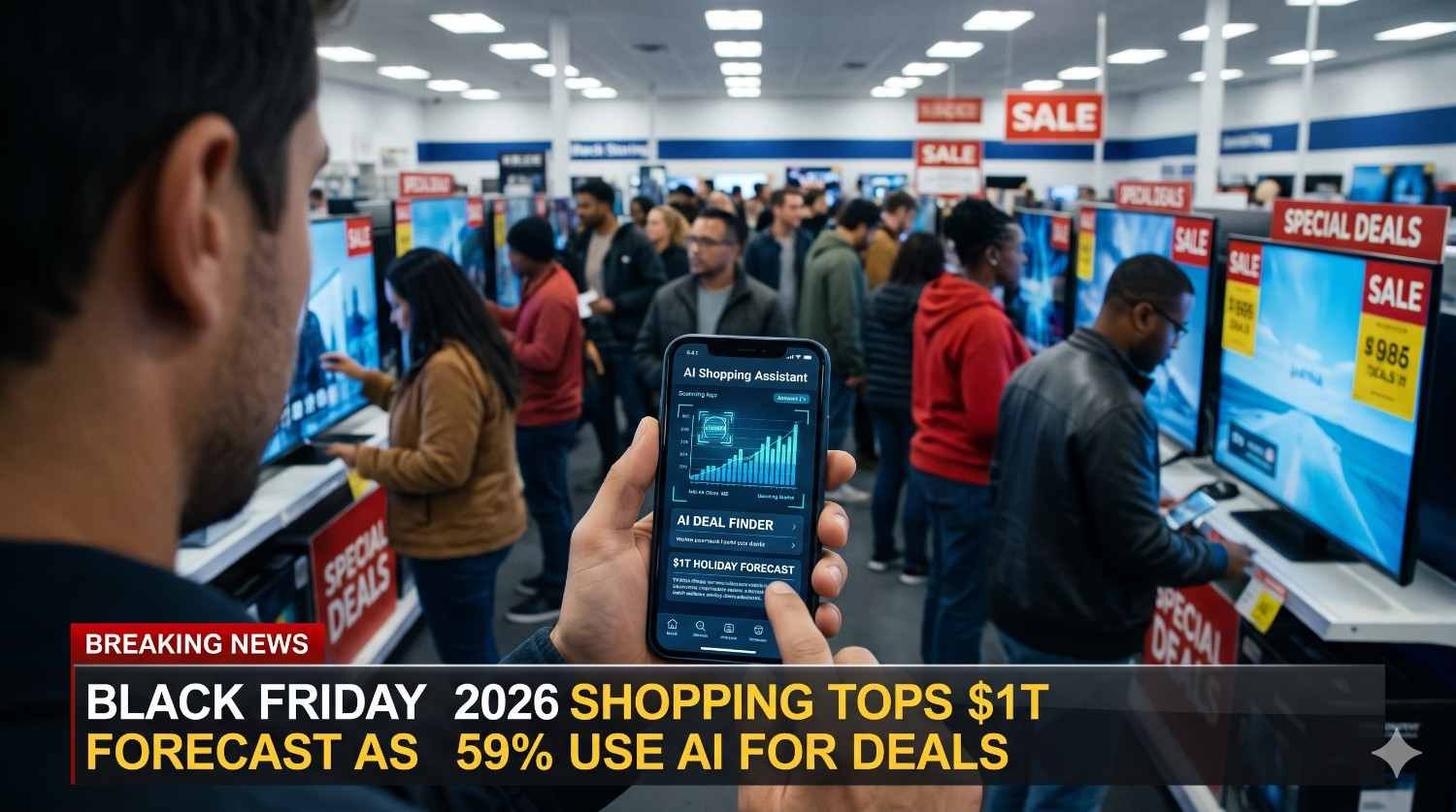
Caption: An American holiday shopper compares online discounts on a smartphone during Thanksgiving weekend as mobile commerce and AI price-checkers drive record digital checkout volume.
Why AI Price-Comparison Tools Changed How Americans Shopped
Visits to U.S. retail websites from AI chatbots and AI-enabled browsers doubled (+100% YoY) on Black Friday 2026. Even more striking, shoppers clicking through from AI tools converted into completed purchases 68% more effectively than traffic from social media or paid search—up sharply from a 38% conversion edge during Black Friday 2025.
Across the full November–December season, Adobe projects AI-referred retail traffic to surge 130% year over year. According to NRF data, 59% of Thanksgiving weekend shoppers plan to use AI for product recommendations (32%), gift brainstorming (31%), price scanning (25%), and budget tracking (25%).
Adobe’s consumer survey also found that 69% of shoppers say they are less likely to return an item researched through an AI assistant. Yet smarter price hunting solves only half the equation—because the payment button Americans tap on Cyber Monday carries far fewer federal protections than most borrowers realize.
Why That $1.09 Billion Cyber Monday BNPL Wave Carries Fewer Federal Protections in 2026
On May 12, 2025, the Consumer Financial Protection Bureau (CFPB) formally withdrew its 2024 interpretive rule that had classified pay-in-four Buy Now, Pay Later lenders as credit card issuers under the Truth in Lending Act (TILA) and Regulation Z (12 CFR Part 1026, Subpart B). As a result, shoppers financing $1.09 billion via BNPL on Cyber Monday cannot rely on that withdrawn rule for automatic federal credit-card-style chargeback or refund rights.
Under the now-rescinded May 31, 2024 rule (89 FR 47068), BNPL providers were instructed to pause billing during merchant disputes, issue standardized periodic statements, and credit returned merchandise just like Visa or Mastercard issuers. When the CFPB published its sweeping withdrawal notice in the Federal Register CFPB Withdrawal Notice (2025-08286), federal enforcement reverted strictly to underlying statutory text and individual lender contracts.
Credit Cards vs. Pay-in-Four BNPL: What Federal Law Actually Covers
The legal gap matters most when a Cyber Monday package arrives damaged, never ships, or requires a partial return:
- Traditional Credit Cards (Fair Credit Billing Act & Regulation Z): Federal law caps unauthorized-charge liability at $50 (most issuers offer $0), lets you withhold payment during a formal billing-error investigation, and gives you chargeback leverage if a merchant refuses a valid refund.
- Pay-in-Four BNPL Loans (Post-Withdrawal Gap): Most zero-interest four-installment loans fall outside open-end Regulation Z card rules unless a state statute steps in. If you return an item, automated biweekly debits often keep pulling from your checking account until the merchant confirms the return with the BNPL lender.
- Online Shipping Deadlines (FTC Mail, Internet, or Telephone Order Merchandise Rule): Regardless of payment method, the FTC Mail, Internet, or Telephone Order Merchandise Rule (16 CFR Part 435) requires U.S. online sellers to ship within the advertised timeframe—or within 30 days if no date is listed—or obtain your explicit consent for a delay and offer a prompt cancellation refund.
- Credit Bureau Visibility & “Phantom Debt”: Although FICO unveiled FICO Score 10 BNPL and FICO Score 10 T BNPL in 2025 and credit bureaus now share BNPL repayment summaries with lenders, reporting remains fragmented. Affirm reports nearly all plans to Experian and TransUnion (without currently moving standard scores, except pre-April 1, 2025 monthly loans), while Klarna and Afterpay withhold most short-term pay-in-four data—meaning on-time payments rarely build your score today, but defaulted balances sent to collections still damage your credit.
According to a December 2025 CFPB market study, 53.6 million Americans used BNPL loans, taking an average of 6.3 loans per lender, with 63% juggling multiple loans simultaneously. Stacking those hidden installments on top of record credit card debt creates a steep January cash crunch—and the exact dollar math shows how quickly a 20% discount evaporates.
Worked Household Dollar Math: How 22.36% APR and Stacked BNPL Hit Real Budgets
Carrying a $1,200 Cyber Week balance on an average U.S. credit card at 22.36% APR adds roughly $238 in interest if paid down at $75 per month—completely erasing a 20% Black Friday discount. Meanwhile, splitting that same $1,200 across four concurrent BNPL plans demands $300 every two weeks through mid-January, creating an overdraft trap during rent and utility week.
Americans entered this shopping weekend already carrying heavy debt loads. According to the Federal Reserve Bank of New York Q3 2026 Household Debt and Credit Report released November 10, total U.S. household debt reached $19.105 trillion, with credit card balances climbing $22 billion in the third quarter to $1.285 trillion and 6.87% of balances transitioning into serious 90-plus-day delinquency.
At the same time, the Federal Reserve Board G.19 Consumer Credit Release shows commercial banks charged an average 22.36% APR on interest-assessed credit card accounts as of August 2026, up from 22.15% in May. Here is how those exact rates play out across two contrasting U.S. households shopping during Black Friday online sales 2026 and Cyber Monday.
Scenario 1: Dual-Income Working Family of Four (Ohio — $1,200 Cyber Week Cart)
Suppose a family in Columbus buys $750 in gifts and $450 in discounted household essentials ($1,200 total, marked down 20% from $1,500 retail).
- Option A — Revolving Credit Card at 22.36% APR ($75/month payment): Paying $75 monthly takes 20 months to clear the $1,200 cart and costs roughly $238 in interest ($1,438 total). Almost 80% of their $300 Black Friday savings goes straight to bank finance charges.
- Option B — Four Stacked Pay-in-Four BNPL Plans ($300 each, 0% interest): The family owes $300 at checkout (Nov. 30), followed by three automatic $300 debits on Dec. 14, Dec. 28, and Jan. 11, 2027. Paid on time, interest is $0—but if the Dec. 28 debit collides with a mortgage or utility draft, two $35 bank overdraft fees plus lender late fees instantly add $70 to $90+, and Ohio lacks a standalone state BNPL dispute statute if a merchant botches a return.
Scenario 2: Retired Couple on Fixed Social Security Income (New York — $600 Cyber Monday Cart)
Suppose a retired couple in Buffalo spends $600 on Cyber Monday for winter apparel, essentials, and grandchildren’s gifts (discounted 30% from $857 retail).
- Option A — Cash-Back Credit Card Paid in Full by Statement Due Date: Total outlay is $600 ($0 interest), preserving the entire $257 discount while keeping full federal Fair Credit Billing Act chargeback protection. (NRF data shows 40% of U.S. shoppers now favor debit cards and 35% use credit cards.)
- Option B — 6-Month Interest-Bearing BNPL vs. Revolving Credit Card: Financing $600 over six months at New York’s 16% statutory interest cap costs about $104.72/month ($28 in interest), whereas carrying $600 for six months at 22.36% APR costs $106.60/month ($40 in interest)—or $75 in interest if stretched across 12 months. For retirees on fixed monthly Social Security deposit dates, biweekly 14-day BNPL auto-debits are especially risky because they drift out of sync with monthly benefit checks.
Where you live also changes your legal leverage if a Cyber Monday installment lender hits you with surprise fees or ignores a refund—because two major states have stepped directly into the CFPB’s regulatory vacuum.
State-by-State BNPL Rules, Exemptions, and Your 2026 Consumer Protections
Only two U.S. states—New York and California—currently enforce or are actively finalizing comprehensive state-level BNPL licensing frameworks, leaving shoppers in the other 48 states largely reliant on provider contracts and general consumer-fraud laws. Understanding which state rules govern your checkout determines whether late fees are capped and how fast lenders must resolve billing errors.
In May 2025, New York enacted the nation’s first standalone BNPL Act. In July 2026, the New York State Department of Financial Services (NYDFS) formally proposed implementing regulations (new 3 NYCRR and amended 23 NYCRR Part 101), closing public comment on September 14, 2026; the rules take effect 180 days after final adoption.
| Jurisdiction | Governing Agency & Statute | Interest / Fee Caps | Dispute & Refund Protections | Current Status (Nov. 2026) |
| New York | NYDFS; NY BNPL Act & Proposed 3 NYCRR / 23 NYCRR Part 101 | 16% interest cap; $8 late-fee safe harbor; max 2 failed payment retries | 60-day dispute notice; 30-day ack; 90-day resolution; $50 unauthorized cap | Comment closed Sept. 14, 2026; effective 180 days post-adoption |
| California | California DFPI; California Financing Law (CFL) | State consumer-loan licensing & CFL fee/rate supervision | State lender exams and California consumer-finance enforcement | Active enforcement on covered consumer loans |
| Federal (All 50 States) | CFPB / FTC (TILA, FCRA, 16 CFR Part 435) | No federal APR or late-fee cap on pay-in-four BNPL | 2024 Reg Z BNPL rule withdrawn May 12, 2025; FCRA credit disputes remain active | Active nationwide |
| Remaining 48 States | State Attorneys General / UDAP laws (MA, IL, MD monitoring bills) | Governed by lender contract & general usury/UDAP law | Voluntary lender policies unless funded via credit card | No standalone BNPL license statute in force |
Hidden Exemptions & Edge Cases Shoppers Overlook
- Debit-Card vs. Credit-Card BNPL Funding: Many BNPL providers prohibit paying installments with a credit card (or treat it as a cash advance), forcing buyers onto debit cards or ACH bank drafts where bank overdraft fees replace credit-card dispute leverage.
- Partial Returns on Multi-Item Carts: If you buy four gifts on one BNPL plan and return one item, lenders typically apply the credit to the final installment first—meaning your December 14 and December 28 payments still debit at full value unless you verify the adjusted schedule in writing.
- Sponsored Search Imposter Scams: In a November 19 FTC Consumer Alert on Holiday Search Scams, federal regulators warned that scammers are buying paid search ads right above legitimate retailers to harvest card numbers and bank logins. The FTC’s public comment window on holding platforms accountable for imposter ads closes Monday, November 30, 2026.
- Stay Tracked on Shifting Rules: Shoppers watching federal enforcement changes and state consumer protections can monitor ongoing US federal consumer finance and policy alerts as NYDFS finalizes its BNPL rollout in early 2027.
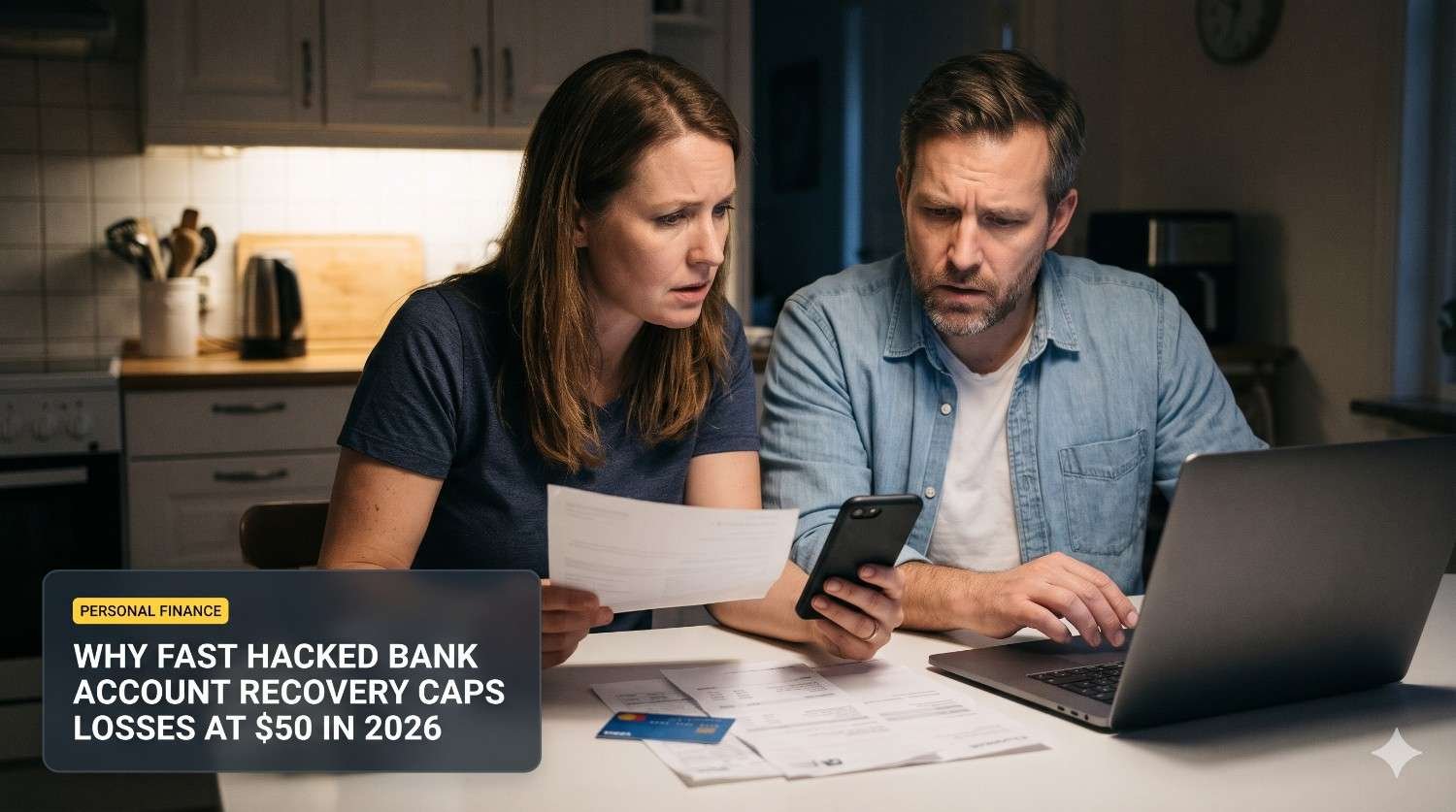
Caption: A household budget review helps shoppers map automatic biweekly Buy Now, Pay Later drafts against December utility bills and 22.36% APR credit card due dates.
Before Cyber Monday deals go live at 12:00 a.m. ET, five concrete safeguards can keep a $15.1 billion shopping frenzy from turning into a 2027 debt hangover.
Your Cyber Monday Payment Calendar and 5-Step Anti-Debt Playbook
The safest way to shop Cyber Monday on November 30 is to cap total BNPL plans at one active contract, fund online orders with a credit card paid in full within 30 days, and audit every seller URL directly instead of clicking sponsored ads. Following a strict repayment calendar prevents January overdrafts and late fees before they start.
Exact Cyber Week 2026 Repayment & Cutoff Calendar
- Saturday–Sunday (Nov. 28–29): Lock in your hard dollar ceiling before $6.1B Saturday and $6.4B Sunday promotions tempt impulse add-ons.
- Monday, Nov. 30 (Cyber Monday — 12:00 a.m. ET through 11:59 p.m. PT): Peak $15.1B deal window and Installment #1 (25% down) for Cyber Monday BNPL orders; final day to submit public comments on the FTC’s imposter-ad rule.
- Monday, Dec. 14, 2026: Installment #2 (25%) auto-debits for standard pay-in-four Cyber Monday purchases.
- Monday, Dec. 28, 2026: Installment #3 (25%) auto-debits—right alongside end-of-month rent, mortgage, and holiday credit card statement cutoffs.
- Monday, Jan. 11, 2027: Final Installment #4 (25%) clears, coinciding with extended holiday return windows at major chains like Target and Best Buy.
5 Fast Steps to Avoid Overspending and Credit Card Traps
- Use AI for Price Verification, Not Impulse Discovery: Paste product names into an AI price checker to confirm a Cyber Monday “40% off” tag beats October Prime Big Deal Days pricing rather than letting chatbots upsell extra accessories.
- Apply the “One-BNPL-Cap” Rule: Never run more than one active pay-in-four plan at a time, and map all four biweekly draft dates directly onto your checking-account calendar before confirming checkout.
- Choose Credit Cards Over Debit or BNPL—Only If Paid in Full: A credit card gives you Fair Credit Billing Act dispute power and zero-liability fraud protection, whereas debit cards expose your checking balance directly and pay-in-four BNPL lacks the withdrawn federal Regulation Z mandate.
- Type Store URLs Directly and Screenshot Disclosures: Following FTC guidance, skip paid “Sponsored” search links, search unknown store names alongside “complaint” or “scam,” and save PDFs of your checkout schedule and return window.
- Run a Free Weekly Credit Check in January: Pull your Equifax, Experian, and TransUnion files at
AnnualCreditReport.com(or call877-322-8228) after holiday statements close to verify no uncredited returns, fraudulent accounts, or inaccurate BNPL collections appear—and dispute errors under the Fair Credit Reporting Act.
If a Cyber Monday retailer ghosts your shipment or a BNPL provider keeps billing you after a verified return, knowing the exact federal portal to file with saves weeks of runaround.
Official Federal Verification Portals and Dispute Directory
Consumers experiencing unshipped Cyber Week orders, imposter-ad fraud, or unresolved BNPL billing disputes can escalate directly to federal regulators without paying a third-party service. If a .gov intake portal experiences peak holiday traffic, keep screenshots of timestamps and use the official toll-free phone lines listed below.
- Dispute a BNPL Lender, Credit Card, or Credit Bureau Error: File online via the CFPB Consumer Complaint Portal (most companies respond within 15 days; final response within 60 days) or call
(855) 411-2372(TTY:855-729-2372), Monday through Friday, 9:00 a.m. to 6:00 p.m. ET. - Report Fake Holiday Storefronts or Delayed Shipments: Submit reports to the FTC at
ReportFraud.ftc.govand cite16 CFR Part 435if an online seller fails to ship within the promised window or 30 days without your consent. - Check Free Weekly Credit Reports: Access federally authorized Equifax, Experian, and TransUnion reports at
AnnualCreditReport.comor by phone at(877) 322-8228. - Track Official Household Debt & APR Benchmarks: Review quarterly debt balances at the Federal Reserve Bank of New York (
newyorkfed.org/microeconomics/hhdc) and monthly bank APR data via the Federal Reserve G.19 release (federalreserve.gov/releases/g19/current/).
Frequently Asked Questions
How much did Americans spend during Black Friday online sales 2026?
Final Adobe Analytics figures released November 28 show Black Friday online sales 2026 hit a record $13.1 billion, up 11.1% year over year and $200 million above Adobe’s initial $12.9 billion forecast. Thanksgiving Day added another $7.1 billion (+10.4%), while physical Black Friday store foot traffic dipped 2.2%.
How big is Cyber Monday 2026 expected to be, and how much will be BNPL?
Adobe Analytics projects Cyber Monday on November 30, 2026, will generate $15.1 billion in U.S. online spending (+6.2% YoY), making it the first single day ever to top $15 billion. Buy Now, Pay Later financing is projected to account for $1.09 billion on Cyber Monday alone, up 5.3% from 2025.
Do Buy Now, Pay Later loans still have federal credit-card dispute protections in 2026?
No—not automatically under federal guidance. On May 12, 2025, the CFPB formally withdrew its May 2024 interpretive rule (89 FR 47068) that applied Regulation Z credit-card dispute and refund rules to pay-in-four BNPL lenders. Consumers must rely on lender contracts, state laws like New York’s BNPL framework, or FCRA error disputes.
Will using Buy Now, Pay Later on Cyber Monday affect my FICO credit score?
Most pay-in-four BNPL activity does not yet shift standard FICO or VantageScore scores because reporting across Affirm, Klarna, and Afterpay remains inconsistent. However, credit bureaus now share BNPL payment summaries with lenders, and unpaid balances sent to third-party collections can still severely damage your credit file.
What are my federal rights if a Cyber Monday order is delayed or never arrives?
Under the FTC’s Mail, Internet, or Telephone Order Merchandise Rule (16 CFR Part 435), online retailers must ship by their promised date—or within 30 days if no date was stated. If delayed, the seller must notify you, obtain your consent to wait, or cancel the order and issue a prompt refund.







Leave a Reply