MOHELA Student Loan Complaints: Breaking 2026 Federal Update & Servicer Crisis
- Key Takeaways (Fast Facts): Rising MOHELA student loan complaints stem from a massive August 2026 system glitch falsely showing thousands of US borrowers in delinquency. With the federal SAVE Plan ending by court order in March 2026, millions face unexpected billing errors, jeopardizing household budgets and FICO scores before September deadlines.
MOHELA student loan complaints have reached a boiling point across the United States as millions of federal borrowers navigate an unprecedented servicing crisis. The sheer volume of billing errors reported to the Consumer Financial Protection Bureau (CFPB) highlights widespread frustration with this major federal contractor. As the U.S. Department of Education transitions millions of accounts following the court-ordered termination of the SAVE Plan in March 2026, administrative chaos has ensued.
Borrowers from California to Florida are currently experiencing false past-due notices that threaten their financial stability. An August 2026 system glitch pushed thousands of accounts into incorrect delinquency statuses, sparking a new wave of MOHELA student loan complaints. This technical failure could severely impact credit underwriting standards and debt-to-income (DTI) ratios for ordinary Americans.
![MOHELA student loan complaints - federal interest rates and IDR limits]](https://sarkariresultine.com/wp-content/uploads/2026/10/Gemini_Generated_Image_8541at8541at8541-80kb-1024x571.jpeg "MOHELA Student Loan Complaints in USA: Urgent Shocking 2026 Data 2")
The lack of weekend customer support at major servicers has only intensified these ongoing MOHELA student loan complaints. Borrowers attempting to secure Public Service Loan Forgiveness (PSLF) are finding their payment counts delayed or improperly tabulated. Taxpayers must understand these systemic failures to protect their hard-earned money and preserve their federal borrower rights.
Federal & Private Lending Rules: How MOHELA Student Loan Complaints Work in 2026
Understanding the root cause of these servicing failures requires a deep dive into how Title IV federal funding and loan servicing operate in the United States. Federal student loan servicers act as the middlemen between the U.S. Department of Education and the everyday American borrower. When this administrative bridge fractures, MOHELA student loan complaints inevitably skyrocket as students are left entirely in the dark.
According to recent student finance and policy trackers on SarkariResultine.com, understanding these updated federal lending guidelines early can save US borrowers thousands of dollars in accrued interest. The complexity of navigating Direct Subsidized and Unsubsidized Loans only magnifies the frustration when billing statements arrive with incorrect balance calculations. Borrowers are legally entitled to accurate Truth in Lending Act (TILA) disclosures, which some claim are being compromised by recent servicing glitches.
Eligibility for federal forbearance and deferment is highly regulated under the Higher Education Act, yet MOHELA student loan complaints often highlight improper denials of these very protections. The sudden sunset of the SAVE Plan forbearance by September 30, 2026, has triggered a mandatory repayment migration for nearly eight million Americans. Those who fail to transition to a new Income-Driven Repayment (IDR) plan risk default, making accurate servicing more critical than ever.
The CFPB and Department of Education Response to MOHELA Student Loan Complaints
The Consumer Financial Protection Bureau strictly monitors federal contractors to ensure American consumers are not penalized by corporate administrative failures. Recent congressional inquiries have directly cited the surge in MOHELA student loan complaints as evidence of a broken federal student aid delivery system. The U.S. Department of Education previously withheld millions in funding from servicers for failing to send timely billing statements, setting a strong regulatory precedent.
Borrowers experiencing false delinquencies must utilize the Federal Student Aid (FSA) Ombudsman to escalate their unresolved MOHELA student loan complaints. State-level regulatory bodies, including the California Department of Financial Protection and Innovation (DFPI) and the New York State Higher Education Services Corporation (NYSHESC), are also closely monitoring the situation. These state agencies provide an additional layer of consumer protection for residents facing devastating and unearned credit hits.
Complete Interest Rate, Loan Limit & Repayment Comparison (2026 Data)
| Federal Student Aid Type | 2026 Interest Rate (Fixed APR) | US Borrowing Limits (Annual/Aggregate) | Key Borrower Protections & 2026 Status |
| Direct Subsidized Loans | 6.53% (Undergraduates) | $3,500 to $5,500 annually | Government pays interest during school; eligible for standard IDR migration. |
| Direct Unsubsidized Loans | 6.53% (Undergrad) / 8.08% (Grad) | Up to $20,500 annually (Graduate) | Accrues interest immediately; highly impacted by the 2026 SAVE Plan cancellation. |
| Direct PLUS Loans | 9.08% (Parents & Graduates) | Up to Cost of Attendance (COA) | Requires FICO credit check; heavily featured in recent servicing billing glitches. |
| Income-Driven Repayment | Variable based on chosen plan | N/A (Repayment Mechanism) | SAVE Plan ended March 2026; borrowers must manually select new Tiered plans. |
The financial math behind these 2026 federal interest rates demonstrates exactly why MOHELA student loan complaints are dominating consumer finance discussions. A slight miscalculation in capitalized interest on a 9.08% Direct PLUS Loan can cost an American family thousands of dollars over a standard 10-year term.
When automatic payment (Auto Pay) discounts drop, as seen with the recent federal adjustments, borrowers face unexpected monthly payment spikes. These volatile repayment dynamics make it vital for borrowers to manually audit their StudentAid.gov dashboards against their servicer’s internal portals.
Real-World Impact: What This Means for US Borrowers & Families
The pocketbook impact of these servicing errors is catastrophic for working-class American families trying to balance household budgets amid inflation. False delinquency reporting instantly damages FICO Score 8 and 9 models, preventing borrowers from securing mortgages, auto loans, or competitive credit cards. In states like Texas and Florida, where cost of living pressures are acute, MOHELA student loan complaints represent real financial trauma.
A borrower mistakenly marked as delinquent may see their debt-to-income (DTI) ratio artificially inflated, locking them out of the US housing market. The ongoing MOHELA student loan complaints reflect a widespread fear that corporate administrative failures are destroying hard-earned American credit profiles. Students who relied on the FAFSA Student Aid Index (SAI) to secure affordable education are now trapped in a bureaucratic nightmare.
To combat this, consumer finance experts strongly advise borrowers to screenshot their prior $0 statements and current forbearance statuses on StudentAid.gov. Proactive documentation is the only reliable defense when escalating MOHELA student loan complaints to federal oversight committees.
30-Second Step-by-Step Financial Action Plan
- Log into StudentAid.gov: Verify your exact loan status (e.g., In Repayment, Forbearance) and download your official federal aid data file.
- Audit Your Servicer Portal: Cross-reference the federal data against your servicer’s dashboard to identify any fabricated past-due balances.
- Submit a Written Dispute: If you spot an error, send a timestamped message through your servicer’s secure portal stating you dispute the false charges.
- File an Official CFPB Complaint: If the issue is not resolved within three business days, officially lodge your MOHELA student loan complaints with the Consumer Financial Protection Bureau.
- Request a Processing Forbearance: Demand that your account be placed in an administrative forbearance while the billing dispute is under active investigation.
Related US Resource: For comprehensive updates on US student loans, FAFSA rules, scholarship opportunities, and consumer finance policy, visitSarkariResultine.com.
Critical 2026–2027 Deadlines, Tax Rules & Costly Debt Traps to Avoid
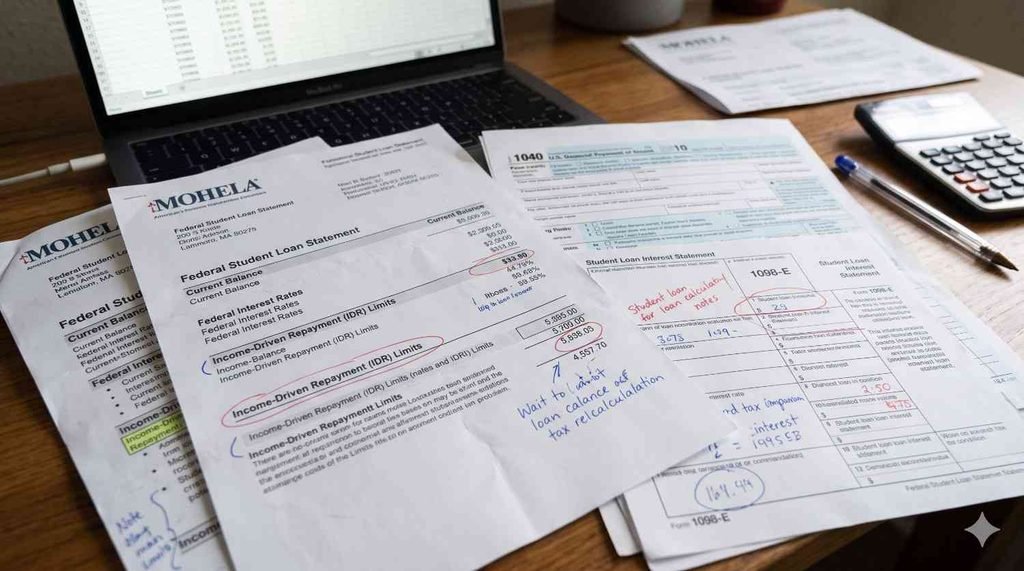
Navigating the US tax code requires absolute precision, especially regarding IRS Form 1098-E for the Student Loan Interest Deduction. Borrowers who pay up to $2,500 in capitalized interest can claim this deduction, but servicing errors can generate highly inaccurate tax documents. The rise in MOHELA student loan complaints frequently involves discrepancies between the interest actually paid and what is officially reported to the IRS.
Furthermore, the termination of the SAVE plan forbearance by September 30, 2026, acts as a hard deadline for millions of citizens. Failing to manually select a new IDR plan through the federal Repayment Calculator will dump borrowers into standard, unmanageable payment tiers. This costly debt trap is completely avoidable if borrowers proactively consolidate or switch plans well ahead of the federal cutoff.
Finally, Section 529 College Savings Plans remain a vital tool for families looking to shield their assets from future borrowing needs. Parents must leverage state-sponsored 529 plans to minimize their reliance on Direct PLUS loans, which feature aggressively high fixed APRs. Understanding these intricate tax maneuvers is essential for bypassing the systemic issues driving the current wave of MOHELA student loan complaints.
[Image Placeholder: US borrower checking IRS tax forms and calendar deadlines on a smartphone | Alt Text: MOHELA student loan complaints – IRS Form 1098-E tax deductions]
Official US Government Verification & Primary Financial Resources
To safely navigate this servicing crisis, borrowers must rely exclusively on verified federal portals rather than third-party debt relief scams. The following official government resources are essential for managing federal aid, reporting servicing misconduct, and verifying daily regulatory changes:
- Federal Student Aid (StudentAid.gov): The primary hub for the Repayment Calculator, PSLF Help Tool, FAFSA applications, and the FSA Ombudsman portal.
- Consumer Financial Protection Bureau (CFPB): The official regulatory body where Americans can securely file actionable MOHELA student loan complaints regarding illegal billing practices.
- Internal Revenue Service (IRS): The authoritative source for downloading Form 1098-E instructions and understanding how student loan interest impacts your annual federal tax return.
What is going on with MOHELA student loans? MOHELA borrowers are currently facing significant repayment shifts because a March 2026 court order officially ended the SAVE (Saving on a Valuable Education) Plan. Borrowers previously enrolled in the SAVE plan are now required to select a new repayment option, such as the Tiered Standard Plan or the new Repayment Assistance Plan (RAP), using the StudentAid.gov portal.
Do unpaid student loans go away after 7 years? No, federal student loans never expire on their own, as there is no statute of limitations for federal student aid. While a defaulted student loan might drop off your consumer credit report after seven years, the federal government maintains the legal right to pursue debt collections indefinitely until the balance is paid.
What is Trump doing with student loans? The Trump administration implemented the Working Families Tax Cuts Act in 2026, which permanently shut down the SAVE plan and overhauled the federal repayment system. For loans disbursed after July 1, 2026, borrowers are restricted to just two options: a Standard Repayment Plan and the income-driven Repayment Assistance Plan (RAP). The administration also introduced strict new borrowing caps, limiting standard graduate students to a $100,000 lifetime unsubsidized maximum, while professional degree students are capped at $200,000.
What is the average monthly payment for a $70,000 student loan? The monthly payment on a $70,000 student loan generally ranges from $742 to $6,285, depending heavily on your exact interest rate and repayment timeline. For example, if you repay a $70,000 balance over a standard 10-year term with a 5% APR, your monthly payment will be $742.
Frequently Asked Questions (US Borrower Guide)
What is the main cause of the recent MOHELA student loan complaints?
The primary driver of recent MOHELA student loan complaints is a massive August 2026 billing glitch that falsely flagged thousands of US borrower accounts as delinquent. Additionally, the chaotic transition away from the court-canceled SAVE Plan has resulted in unprecedented administrative delays and customer service blackouts.
How do MOHELA student loan complaints affect my FICO credit score?
Unresolved MOHELA student loan complaints regarding false delinquencies can severely damage your FICO Score 8 and 9 metrics if the servicer improperly reports late payments to credit bureaus. Borrowers must actively dispute these errors to prevent their US credit profiles and debt-to-income (DTI) ratios from being artificially ruined.
Can I change my federal servicer if I have MOHELA student loan complaints?
You cannot directly choose your standard federal loan servicer, but you can trigger a transfer by consolidating your Title IV loans into a Direct Consolidation Loan. Submitting certified PSLF employment forms may also prompt federal authorities to transition your account to a specialized servicing department, resolving ongoing MOHELA student loan complaints.
Where is the best place to escalate MOHELA student loan complaints?
If your servicer ignores your internal messages, you should instantly escalate your MOHELA student loan complaints to the Consumer Financial Protection Bureau (CFPB) and the Federal Student Aid (FSA) Ombudsman. Residents of heavily regulated states like California and New York can also file parallel grievances with their state’s financial protection departments.
What should I do if my IRS Form 1098-E is wrong due to servicing errors?
If your tax documents reflect the systemic errors seen in recent MOHELA student loan complaints, you must demand a corrected Form 1098-E directly from your servicer’s billing department. Never file your federal tax return with inaccurate capitalized interest data, as this could trigger an IRS audit and forfeit your lawful student loan interest deduction.
Disclaimer: This article is strictly for educational and informational purposes only and does not constitute certified financial, legal, or tax advice. Borrowers should always consult with a licensed US financial advisor, certified CPA, or legal counsel regarding their specific federal student loan and credit situations.