
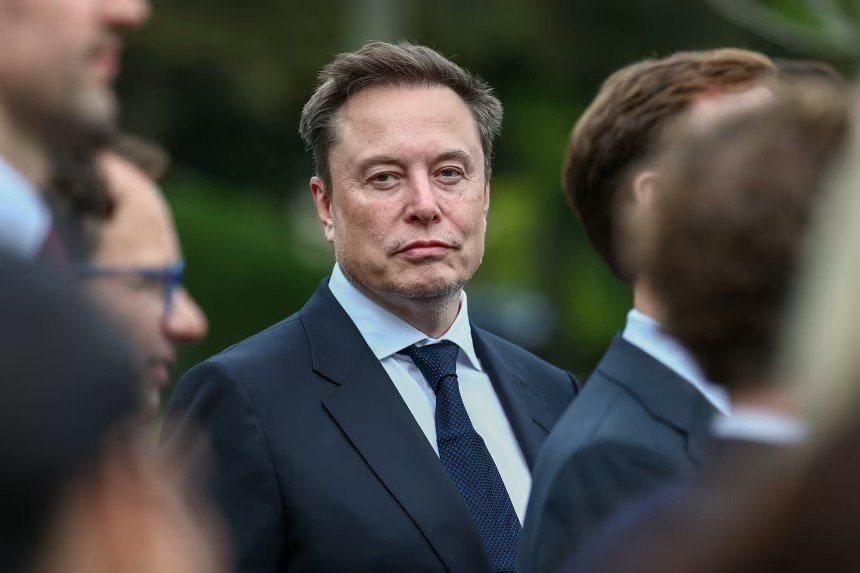
Elon Musk Triggers Market Shockwave with $10.7B Pledge for American Children
Key Takeaways (Fast Facts)
Elon Musk announced Monday he will personally gift one share of SpaceX stock to all 73 million American children next year. Valued at roughly $10.7 billion total, this unprecedented transfer requires massive coordination with the US Treasury, sidesteps IRS gift taxes, and introduces American youth directly to domestic equities.
Tech billionaire Elon Musk has ignited a firestorm across Wall Street and Washington by pledging to give every child in America a direct equity stake in his $2 trillion aerospace empire.
“Next year, I will give one of my SpaceX shares to every kid in America,” Musk declared on his social media platform X late Monday.
He immediately followed the bombshell with a promise that this massive wealth transfer “will be the first of many.”
This move comes just months after SpaceX executed the largest initial public offering (IPO) in history this past June, raising a staggering $85.7 billion.
When the New York Stock Exchange closing bell rang last Friday, a single share of SpaceX stock was trading at approximately $146.
According to the latest United States Census Bureau data, roughly 73 million citizens currently reside under the age of 18 within the nation’s borders.
If Musk successfully executes this unilateral transfer from his personal 38% equity holding, the giveaway will instantly inject $10.7 billion in liquid assets into the hands of America’s youth.
Financial analysts quickly noted that because Musk specified giving “one of my SpaceX stock shares,” the move prevents corporate dilution while putting the logistical burden of the transfer squarely on his personal family office and federal regulators.
Behind the Breaking Development: What Triggered This Shift
Musk’s unprecedented announcement did not occur in a vacuum.
The US technology sector is currently facing intensifying legislative scrutiny from the FTC and congressional committees over the societal impact of artificial intelligence and automated job displacement.
Just 24 hours prior to Musk’s post, AI research rival Anthropic announced it was committing at least 5% of its shares to a dedicated “Public Benefit Fund.”
Anthropic’s fund, valued at $48 billion based on the private firm’s latest valuation, is designed to funnel direct distributions to populations displaced by AI.
Musk aggressively rejected Anthropic’s non-profit bureaucratic structure, opting instead for a direct-to-consumer wealth transfer.
“I recommend giving the shares directly to the public… This is what I will be doing,” Musk retorted.
The industry-wide panic regarding corporate optics is being fueled by aggressive new media, including the recently released documentary The Social Reckoning, which exposed unsafe practices at major social platforms.
Musk himself is currently navigating public relations headwinds from a highly critical new biographical documentary charting his controversial foray into US domestic politics.
By bypassing non-profit intermediaries and pushing SpaceX stock directly into the brokerage accounts of American minors, Musk is aggressively rewriting the playbook for corporate social responsibility.
Federal and Regulatory Precedents
Offering minors a direct entry point into the US stock market is already gaining unprecedented federal traction in Washington this quarter.
Earlier this month, the US Treasury Department launched the highly anticipated “Trump Accounts.”
Authorized under the recently enacted One Big Beautiful Bill Act, this federal savings and investment vehicle automatically signed up millions of American minors.
Children born between January 1, 2025, and December 31, 2028, are now eligible for a one-off $1,000 government contribution to seed these tax-advantaged accounts.
SpaceX President Gwynne Shotwell and her husband have already leveraged this federal infrastructure, pledging over $320 million in SpaceX stock—totaling more than 2 million shares—specifically for low-income children utilizing these Trump Accounts.
However, Musk’s pledge to cover all 73 million American children stretches far beyond the narrow 2025-2028 demographic targeted by the Treasury Department.
To legally transfer an asset to a minor, Wall Street brokerages must comply with the Uniform Transfers to Minors Act (UTMA) or the Uniform Gifts to Minors Act (UGMA).
Furthermore, strict anti-money laundering (AML) protocols enforced by the SEC and the USA PATRIOT Act mandate rigorous Customer Identification Programs (CIP).
This means that a verified adult custodian must legally open and manage the account receiving the SpaceX stock on behalf of the child.
Whether the US government will establish a centralized clearinghouse to bypass traditional brokerage friction or rely on private institutions like Fidelity and Charles Schwab remains the multi-billion-dollar question.
Key Data & Comparative Breakdown (At a Glance)
To understand the sheer scale of this wealth transfer, financial advisors are closely mapping out how Musk’s proposal compares to existing federal frameworks.
The primary difference lies in the custody of the asset, the tax implications upon transfer, and the long-term liquidity of the SpaceX stock.
| Metric / Feature | Traditional UGMA/UTMA Custodial Account | US Treasury “Trump Accounts” (2026) | Musk’s Proposed SpaceX Stock Giveaway |
| Asset Type | Cash, Mutual Funds, Equities | $1,000 Federal Seed + Donated Equity | One single share of SpaceX stock ($146) |
| Eligibility Target | Individual choice by parents | All US children born 2025-2028 | All 73 million US citizens under 18 |
| Tax Implications (IRS) | Subject to standard “Kiddie Tax” | Tax-advantaged growth | Zero gift tax (Under $18k annual IRS limit) |
| Custodial Control | Parent/Guardian manages until age 18/21 | Federal Government & Custodial Banks | Pending SEC/Treasury framework |
| Liquidity & Selling | Can be liquidated by custodian anytime | Restricted until adulthood | Likely restricted until age 18 |
This financial matrix reveals a crucial IRS loophole working entirely in Musk’s favor.
Because the current trading price of SpaceX stock sits around $146, the transfer falls exponentially below the IRS annual gift tax exclusion limit, which is set at $18,000 per recipient for the 2026 tax year.
Musk will not owe a single cent to the IRS in gift taxes for distributing $10.7 billion in personal wealth.
Furthermore, the recipients (the children) will not have to claim the receipt of the stock as earned income on a W-2 or standard 1099-MISC form.
Real-World Impact: What This Means for Everyday Americans
For the average American household, receiving a share of SpaceX stock represents far more than a momentary headline.
It acts as a foundational building block for domestic financial literacy and long-term generational wealth generation.
When young adults finally take legal control of these UTMA/UGMA accounts at age 18 or 21 (depending on their specific state statutes), the matured asset becomes legally actionable collateral.
Holding verified domestic equities can indirectly support a young borrower’s financial profile when they eventually enter the US credit system.
While holding a stock does not directly generate a FICO Score 8 or 9, liquidating the asset can provide the vital capital needed for a secured credit card or a down payment on an auto loan.
This prevents young borrowers from being forced into predatory subprime lending markets governed by high Truth in Lending Act (TILA) APR spreads.
“For comprehensive updates on consumer rights, career opportunities, and economic policy, visit SarkariResultine.com.”
However, everyday Americans must be prepared for the strict IRS compliance that accompanies stock ownership.
If SpaceX stock eventually issues a corporate dividend, those earnings will be subject to the IRS “Kiddie Tax” rules.
Under current US tax code, a child’s unearned income over $2,600 is taxed at the parent’s marginal tax rate, meaning families will need to closely monitor their 1099-DIV forms come April.
Furthermore, consumer protection advocates at the Consumer Financial Protection Bureau (CFPB) are already warning parents to be on high alert.
Scammers will inevitably launch phishing campaigns promising to “expedite” or “claim” the free stock in exchange for Social Security Numbers.
American citizens should never provide minor identification details to unverified third-party websites claiming affiliation with Musk.
Critical Timeline & What Happens Next
The immediate hurdle for executing this $10.7 billion transfer lies in the rigid infrastructure of the American banking sector.
Musk indicated the distribution of the SpaceX stock will commence “next year,” giving federal regulators roughly twelve months to establish a frictionless pipeline.
Wall Street analysts anticipate that the Securities and Exchange Commission (SEC) will require Musk to file a specialized prospectus or seek a “no-action” letter regarding the mass distribution of equity.
Simultaneously, the US Treasury Department may need to drastically expand the scope of the Trump Accounts to legally accommodate children born before 2025.
If federal accounts cannot be utilized, Musk’s family office will likely have to partner with a massive domestic clearinghouse like Apex Clearing or a retail brokerage titan like Fidelity.
Parents will be required to log into a secure domestic portal, verify their identity via standard Patriot Act KYC protocols, and officially link the new share to an existing custodial portfolio.
Over the coming weeks, Americans can expect a flurry of official press releases from the SEC and the Treasury detailing the legal mechanics of this unprecedented corporate giveaway.
Official Verification & Primary US Resources
To ensure your family is prepared for the upcoming equity distribution, financial experts recommend monitoring the following primary federal agencies.
Do not rely on unverified social media links when managing financial assets for minors.
- US Securities and Exchange Commission (SEC): Review the latest corporate filings, insider trading disclosures, and public offering data directly via SEC.gov.
- US Department of the Treasury: Track official updates on federal savings programs, Trump Accounts, and savings bonds via Treasury.gov.
- Internal Revenue Service (IRS): Consult official guidelines regarding the Kiddie Tax, gift tax exemptions, and UTMA/UGMA reporting requirements at IRS.gov.
- Consumer Financial Protection Bureau (CFPB): Access verified educational resources regarding child identity theft and custodial banking safe practices at ConsumerFinance.gov.
Frequently Asked Questions (Fast Answers)
Do I have to pay taxes if my child receives a share of SpaceX stock?
No, you will not pay an upfront tax on the gift itself. Because the $146 value is well under the $18,000 IRS annual exclusion limit, the transfer triggers zero federal gift tax liabilities.
How will my child actually claim their free SpaceX stock?
While the logistical framework is still pending, parents will likely need to establish a verified custodial account (UTMA/UGMA) through a registered US brokerage. You will have to provide your child’s Social Security Number and pass standard federal identity verification.
Can I immediately sell the SpaceX stock once it is transferred?
Under US custodial law, the adult custodian technically manages the account, but the funds legally belong to the minor. Any proceeds from liquidating the SpaceX stock must strictly be used for the direct benefit of the child.
Is this related to the new federal Trump Accounts?
Musk’s pledge is a separate, private initiative, though he may utilize the government’s Trump Accounts infrastructure to facilitate the transfer. Recently, SpaceX President Gwynne Shotwell pledged $320 million in stock specifically to the Trump Accounts program for low-income youths.
Will owning SpaceX stock impact my child’s future financial aid?
Yes, assets held in a minor’s name under a UTMA or UGMA account are weighed heavily by the Free Application for Federal Student Aid (FAFSA). Federal guidelines assess student-owned assets at a 20% rate when calculating expected family contributions for college.