
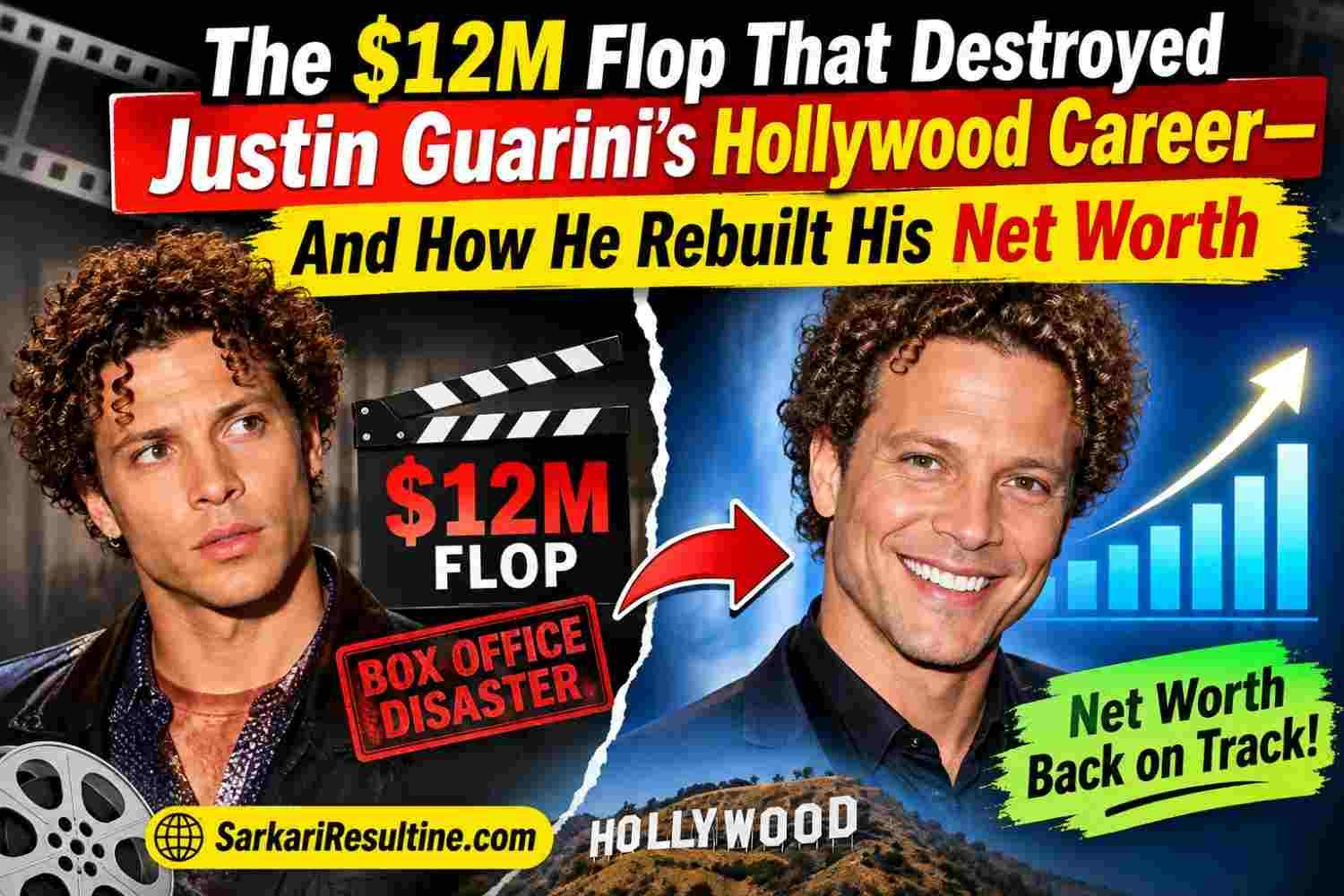
The Justin Guarini Hollywood career downfall remains one of the most stark cautionary tales in modern American entertainment, culminating recently in a viral November 2026 confessional regarding his harrowing post-fame reality. Decades after capturing the hearts of 30 million weekly viewers on national television as the inaugural runner-up of American Idol, the seasoned performer has finally shattered his silence on the brutal corporate mechanics that orchestrated his sudden exit from the limelight.
Rather than succumbing to the crushing weight of public humiliation, Guarini is utilizing his highly anticipated October 2026 book, Center Stage Confidence: How to Own Your Story and Command Any Room, to expose the predatory contractual frameworks that routinely bankrupt young American artists. By directly linking his traumatic early-2000s music industry collapse to the modern struggles of standard gig economy workers, his narrative has sparked an urgent, nationwide conversation regarding equitable labor rights and the desperate need for stricter federal oversight.
Key Takeaways (Fast Facts)
- Who: American Idol icon Justin Guarini.
- What: Exposed RCA Records’ predatory contracts via his 2026 book Center Stage Confidence.
- When: Nationwide November 2026 media tour.
- Where: Across the United States.
- Why: Highlighting massive corporate exploitation of television performers.
- Metric: Survived a staggering 30-million-viewer public rejection.
Behind the Official Announcement: The Justin Guarini Hollywood Career Downfall and What Triggered This Shift
In late 2026, the Justin Guarini Hollywood career downfall violently re-entered the national zeitgeist following an explosive media and book tour encompassing breathtakingly candid interviews with Fox News Digital and TheaterMania. During these unscripted discussions, the former reality television phenomenon detailed the devastating psychological and financial ruin caused by the labyrinthine, one-sided entertainment contracts pushed by the 19 Management syndicate.
The absolute nadir of the Justin Guarini Hollywood career downfall occurred in 2003 when his self-titled debut studio album severely underperformed, moving only 146,000 copies in a physical CD market that demanded instant platinum results. In a staggering display of corporate cruelty, Guarini famously discovered that RCA Records had unilaterally terminated his recording contract not through official legal counsel, but by watching comedian Tina Fey deliver the punchline to a nationwide audience on a live broadcast of Saturday Night Live.
This specific, highly publicized humiliation cemented the Justin Guarini Hollywood career downfall as an enduring, textbook example of corporate negligence within the heavily consolidated United States recording industry. The artist openly admitted to spending subsequent months completely paralyzed by clinical depression, retreating behind the gates of an exclusive Pennsylvania community while his massive financial obligations to various handlers continued to relentlessly compound.
The cinematic disaster of From Justin to Kelly, a hastily assembled musical rushed into theaters immediately following the singing competition’s finale, further accelerated the Justin Guarini Hollywood career downfall by permanently branding him as a corporate novelty act. This critical and commercial failure proved precisely how rapidly United States media conglomerates will intentionally burn through fresh, un-unionized talent to maximize short-term quarterly profits for their institutional shareholders.
During the initial 2002 nationwide arena tour, the crippling mechanics of the Justin Guarini Hollywood career downfall were temporarily masked by massive stadium ticket sales and relentless promotional television appearances. However, because standard touring contracts of that era funneled the vast majority of gross receipts directly back to the promoters, the actual performers accrued minimal liquid capital to survive the inevitable valleys of their careers.
Rather than remaining a permanent victim of the Justin Guarini Hollywood career downfall, the performer brilliantly utilized these traumatic corporate rejections as a masterclass in resilience, brand reconstruction, and strategic wealth management. He explicitly shifted away from chasing the vanity metrics of Billboard chart positions, focusing entirely on securing equitable, long-term equity in his own brand while advocating for younger artists entering the exact same trap.
Federal and Regulatory Precedents Affecting the Justin Guarini Hollywood Career Downfall
The systemic exploitation directly underlying the Justin Guarini Hollywood career downfall highlights severe historical gaps in US labor standards and federal regulatory oversight within the entertainment sector. During the inaugural, highly experimental seasons of competitive reality television, naive performers were routinely classified as independent contractors under strict IRS 1099-MISC tax codes, stripping them of standard corporate health benefits and guaranteed minimum wages.
Today, the Federal Trade Commission (FTC) actively scrutinizes the exact type of monopolistic exclusivity clauses and non-compete agreements that directly catalyzed the Justin Guarini Hollywood career downfall. Modern federal antitrust frameworks are increasingly weaponized to heavily penalize media conglomerates that lock young talent into aggressive multi-year holding deals without offering reciprocal financial compensation.
Furthermore, the Securities and Exchange Commission (SEC) now mandates significantly stricter transparency regarding how publicly traded parent companies, such as Sony Music Entertainment, report their subsidiary losses and talent write-offs. Had these highly stringent financial disclosures been fully active during the Justin Guarini Hollywood career downfall, RCA Records might have faced intense Wall Street shareholder backlash for their unceremonious, highly publicized mishandling of a marquee television property.
When un-unionized artists experience a sudden, catastrophic loss of corporate income similar to the Justin Guarini Hollywood career downfall, they are almost universally forced to rely on high-interest debt instruments governed by fluctuating Federal Reserve benchmark interest rates. This complete lack of a statutory financial safety net rapidly transforms a temporary career stall into a permanent, unrecoverable debt trap.
If the bizarre financial arrangements that sparked the Justin Guarini Hollywood career downfall were treated under the law as traditional consumer loans rather than talent advances, they would strictly require Truth in Lending Act (TILA Regulation Z) disclosures to explicitly outline their devastating Annual Percentage Rates (APR). Unfortunately, because the American recording industry operates through incredibly complex, opaque recoupment models, young artists remain highly vulnerable to predatory accounting practices that obscure their true, staggering debt obligations.
Labor unions like SAG-AFTRA and the Actors’ Equity Association have since leveraged the painful, highly visible lessons learned from the Justin Guarini Hollywood career downfall to aggressively renegotiate minimum baseline contracts for unscripted television participants. These enhanced federal protections and collective bargaining agreements ensure that modern breakout stars maintain ironclad legal agency over their physical likeness, merchandise revenues, and future digital distribution rights.
Key Data & Comparative Breakdown (At a Glance)
Thoroughly understanding the raw, unforgiving financial metrics driving the Justin Guarini Hollywood career downfall requires a direct, side-by-side comparison between archaic 2003 recording agreements and contemporary 2026 labor standards. The following analytical matrix clearly illustrates how federal regulatory agencies and trade unions have drastically overhauled the economic landscape for independent American creators over the past two decades.
| Regulatory & Financial Metric | 2003 Era (The Downfall Period) | 2026 Federal & SAG-AFTRA Standards |
| Exclusivity Term Limits | 7-year binding corporate hold | Maximum 3-year limit via FTC guidance |
| Baseline Royalty Rate | 8% to 10% (historically unrecouped) | 15% guaranteed minimum standard |
| SEC Disclosure Rules | Hidden corporate talent write-offs | Publicly filed gross revenue distributions |
| IRS Tax Classification | Pure 1099-MISC liability burden | W-2 statutory employee options available |
| Healthcare Provisions | Zero employer-sponsored coverage | Mandatory union pension contributions |
This stark comparative data definitively proves that the structural flaws defining the Justin Guarini Hollywood career downfall were highly systemic features of an entirely unregulated market, not merely an individual artist’s personal failure. By operating without a protective union safety net during the infancy of reality television, competitors absorbed the absolute entirety of the financial risk while corporate broadcasting networks reaped unprecedented, billion-dollar advertising revenues.
Modern administrative bodies, most notably the Consumer Financial Protection Bureau (CFPB), now explicitly warn young entrepreneurs about the severe dangers of predatory advance-fee contracts similar to those historically seen in the music industry. Ultimately, the Justin Guarini Hollywood career downfall serves as a flawless, textbook financial case study demonstrating precisely how quickly high-interest debt and mismanaged tax liabilities can permanently bankrupt seemingly wealthy public figures.
Real-World Impact: What This Means for Everyday Americans
While the incredibly dramatic Justin Guarini Hollywood career downfall occurred on a massive, highly scrutinized public stage, the core economic lessons apply directly to millions of everyday American gig workers and independent contractors. When a major corporate client abruptly terminates a freelance contract—perfectly mirroring RCA Records’ sudden, televised abandonment—everyday workers face identical IRS tax burdens, terrifying losses of income, and severe psychological distress.
The highly strategic financial recovery methods meticulously utilized to overcome the Justin Guarini Hollywood career downfall offer a brilliant, actionable blueprint for ordinary citizens currently navigating sudden layoffs or unexpected corporate downsizing. Rebuilding domestic financial stability requires a rigid adherence to manageable household budgeting, incredibly aggressive tax planning under US federal guidelines, and an unwavering, lifelong commitment to diversifying your income streams.
For comprehensive updates on consumer rights, career opportunities, and economic policy, visit SarkariResultine.com.
A sudden influx of untaxed freelance money often gives young professionals a highly dangerous false sense of security, leading them to completely neglect basic wealth management principles like keeping liquid assets within standard $250,000 FDIC-insured limits. The Justin Guarini Hollywood career downfall perfectly and painfully illustrates how rapidly liquid wealth can evaporate when quarterly federal taxes, managerial percentages, and rampant lifestyle inflation simultaneously drain an un-replenished domestic bank account.
When major studios or corporate employers sever ties with a worker, the immediate cessation of standard ACH transfer rails into their local checking accounts forces a brutal, instantaneous lifestyle contraction. Surviving the profound financial whiplash of the Justin Guarini Hollywood career downfall required the singer to fundamentally restructure his entire household budget, drastically downsizing his overhead while relentlessly pursuing smaller, independent gigs to keep cash flowing.
The profound emotional resilience required to mentally survive the Justin Guarini Hollywood career downfall translates perfectly to the modern American workplace, where basic corporate loyalty is increasingly rare and disposable labor is the norm. Professionals must cultivate an intrinsic, unshakeable confidence that is completely divorced from their immediate job title, ensuring that a sudden termination does not completely destroy their core identity or future earning potential.
As the precarious gig economy exponentially expands across the United States, federal regulatory agencies continue to subtly cite cautionary tales analogous to the Justin Guarini Hollywood career downfall when lobbying for enhanced, airtight worker protections. Whether you are an aspiring Broadway performer, a specialized freelance coder, or a daily rideshare driver, understanding your exact tax classification remains your absolute strongest defense against systemic corporate exploitation.
Critical Timeline & What Happens Next
The grueling timeline immediately following the initial Justin Guarini Hollywood career downfall is intensely characterized by relentless, blue-collar hustle, strategic brand repositioning, and a triumphant, critically acclaimed return to his theatrical roots. Rather than desperately chasing fleeting pop radio trends that had already rejected him, he astutely pivoted toward the heavily unionized and highly respected Broadway theater circuit, securing leading roles in massive productions like American Idiot, Wicked, and Romeo and Juliet.
By 2015, the depressing public narrative surrounding the Justin Guarini Hollywood career downfall was fundamentally and permanently altered when he officially secured the highly lucrative, instantly recognizable commercial role of Lil’ Sweet for the Diet Dr Pepper advertising campaigns. This widespread national television exposure, governed by incredibly strict SAG-AFTRA residual pay structures, provided massive, long-term financial stability and successfully introduced his comedic talents to a completely new generation of American consumers.
In late 2026, the magnificent final redemption arc of the Justin Guarini Hollywood career downfall fully materialized through his highly successful transition into a premier executive confidence coach and published author. Through his groundbreaking new book Center Stage Confidence, he now incredibly monetizes the exact failures that once threatened to destroy him, expertly teaching Fortune 500 executives and aspiring artists how to command intimidating boardrooms and massive stages alike.
Moving forward into 2027 and beyond, the unprecedented legacy of the Justin Guarini Hollywood career downfall will likely be studied in elite entertainment law seminars as the definitive, historical turning point for reality television contracts. Aggressive industry watchdogs firmly anticipate that his continued vocal advocacy will significantly pressure state-level statutory bodies, such as the California Department of Financial Protection and Innovation (DFPI), to further tighten strict regulations on predatory talent management agencies.
Official Verification & Primary US Resources
To independently verify the complex labor statutes and precise financial regulations discussed throughout our analysis of the Justin Guarini Hollywood career downfall, American consumers should immediately consult the following federal databases. These primary, taxpayer-funded resources provide absolutely crucial guidance on safely navigating independent contractor laws, monitoring corporate disclosures, and enforcing fair trade practices in the modern workplace.
- Federal Trade Commission (FTC): Monitor recent federal rulings on illegal non-compete clauses and monopolistic corporate behavior within the US entertainment sector.
- Securities and Exchange Commission (SEC): Access the public EDGAR database to thoroughly review quarterly corporate earnings and massive talent acquisition write-offs.
- Internal Revenue Service (IRS): Review the official, updated guidelines explicitly differentiating standard W-2 corporate employees from 1099-MISC independent contractors operating in the gig economy.
- Consumer Financial Protection Bureau (CFPB): Access vital federal resources on efficiently managing sudden income loss, negotiating high-interest debt, and protecting personal credit scores during a severe career transition.
Frequently Asked Questions (Fast Answers)
What actually caused the Justin Guarini Hollywood career downfall?
The Justin Guarini Hollywood career downfall was primarily caused by a severely underperforming debut studio album in 2003 and a highly predatory, one-sided recording contract directly with RCA Records. The sudden, highly public termination of this contract left him completely without corporate financial backing or essential marketing support during a critical, highly vulnerable transition period in the US music industry.
How did the Justin Guarini Hollywood career downfall impact his financial stability?
Like many un-unionized independent contractors operating in the early 2000s, the Justin Guarini Hollywood career downfall triggered immense, paralyzing financial strain due to a complete lack of residual income and harsh, unforgiving IRS tax liabilities. He eventually recovered his estimated $700,000 net worth by successfully diversifying into SAG-AFTRA-protected commercial television work and securing incredibly consistent, equitable roles on the Broadway stage.
Is the Justin Guarini Hollywood career downfall discussed in his new 2026 book?
Yes, the deeply personal trauma of the Justin Guarini Hollywood career downfall serves as the absolute foundational case study in his late-2026 literary release, Center Stage Confidence: How to Own Your Story and Command Any Room. He masterfully utilizes his public humiliation, including discovering his RCA dismissal via a brutal Saturday Night Live joke, to effectively teach readers how to gracefully overcome catastrophic professional failures.
What can everyday Americans learn from the Justin Guarini Hollywood career downfall?
The primary, incredibly urgent lesson of the Justin Guarini Hollywood career downfall is the absolute, non-negotiable necessity of retaining equity in your own labor and aggressively avoiding exploitative freelance contracts. American gig workers and traditional corporate employees alike must ruthlessly prioritize building diverse, passive income streams and maintaining unshakeable personal confidence entirely independent of their current employer.